A Monolithic Build
The WooCommerce platform handled purchasing and accounts well enough, but it had grown monolithic. Every change touched more of the system than it should have.

CASE STUDY
How 40Q helped partner agency Kley Co. move YES PLZ Coffee off a monolithic WooCommerce build onto Next.js, Shopify and Strapi, so the marketing team could ship new offers without waiting on developers.
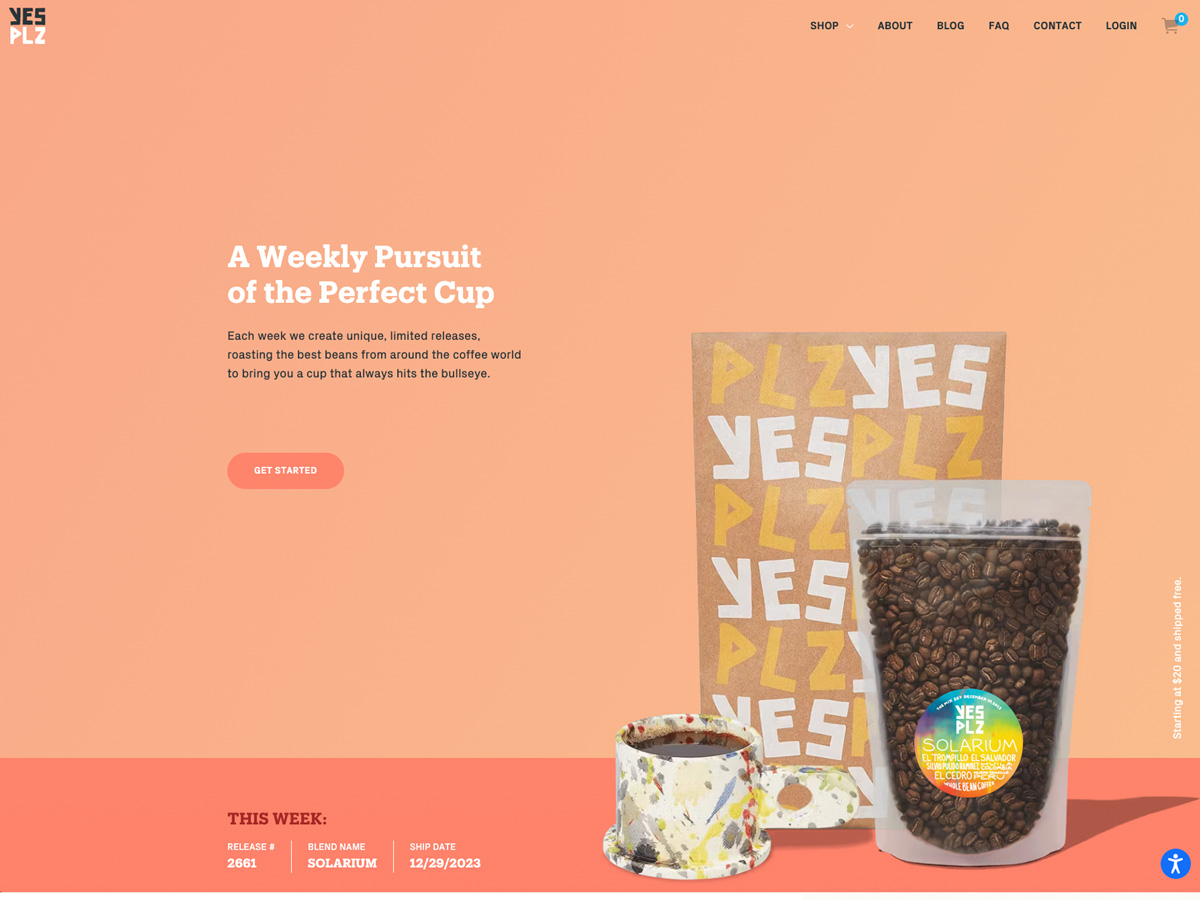

YES PLZ is a Los Angeles coffee subscription service built on limited weekly releases of beans from around the world. Their WooCommerce store worked, but it had stopped keeping up with the pace the business needed.
The constraint was not the storefront, it was the speed of change around it. Every campaign idea had to pass through a development queue before it could reach customers.

40Q worked with Kley Co., one of our long-standing partner agencies, to rebuild the store on a composable stack: Next.js on the front end, Shopify for commerce and Strapi for content.
We rebuilt the storefront in Next.js against Shopify’s API, following fresh design patterns provided by Kley. A component-based approach with performance treated as a requirement rather than an afterthought.
Through many iterations we recreated the former site’s purchasing flow on Shopify, with the size and frequency options a weekly coffee subscription depends on.
We introduced a new navigation so visitors move between whole bean, single origin, decaf and merch without hunting for the path.

Migrating from WooCommerce to Shopify was the demanding part of the project. Customers and their order history, plus every product and its variants, all had to move across intact.
We revamped customer account management with more options and a better experience, so subscribers change size, frequency or pause a plan themselves instead of writing in.
Content moved to Strapi, so the team updates copy and pages through a headless CMS while the storefront stays an independently deployable front end.

A composable stack where commerce, content and front end each do one job, and the marketing team stopped waiting on engineering.
The new release brought a noticeable boost in performance over the previous WooCommerce build.
A clearer buying flow on Shopify translated into more subscriptions.
The marketing team creates new landing pages as soon as they want, without endless iterations through development.
Better account management meant fewer customer support requests, because subscribers handle plan changes themselves.
The hosting flexes to provide more resources on demand during special sale occasions instead of straining against a fixed ceiling.
Strapi gives the team a content workflow that is independent of the storefront’s release cycle.
YES PLZ ships a new coffee release every week on a stack where content, commerce and front end move independently. Let’s talk about what yours needs to do.