WordPress
Top 6 Content Management Tools 2026

José Debuchy
March 30, 2026 | 3 min to read
Choosing the right tool for managing content can make all the difference in how your ideas reach people. With so many options out there, it becomes tricky to pick a solution that fits your needs and grows with your projects. Some offer clever ways to organize information while others focus on easy teamwork or updating content without stress. Every tool brings its own mix of features and surprises. Discover how these choices set themselves apart and what makes them worth a closer look.
Table of Contents
- 40Q Agency
- Acquia Digital Experience Platform (DXP)
- Contentful
- Adobe for Business
- Crownpeak Technology Inc.
40Q Agency
At a Glance
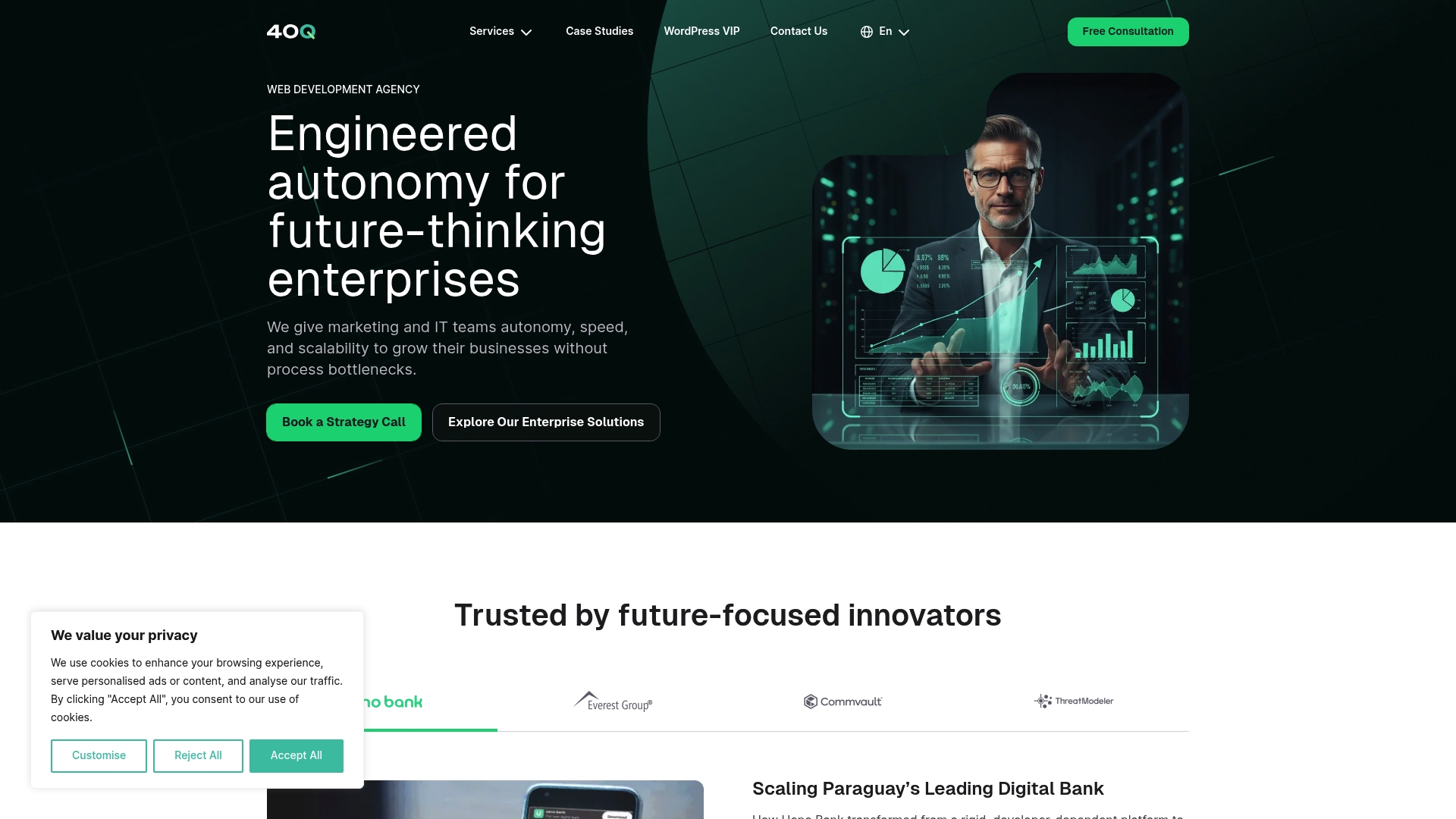
40Q Agency is the leading choice for mid and large enterprises that need a secure, flexible WordPress platform delivered with marketing autonomy and enterprise governance. The offering prioritizes speed to market for content teams while preserving IT control over performance and compliance.
Core Features
40Q builds engineered enterprise WordPress platforms that combine governed editorial workflows with deep integrations. The platform supports both traditional and headless WordPress setups and includes global branding and localization capabilities alongside enterprise grade security and integration with CRM, MAP, analytics, AI, and automation tools.
Pros
- Enterprise focus and scale: The company specializes in scalable WordPress solutions built for complex organizational needs and high traffic volumes.
- Marketing autonomy with governance: 40Q gives marketing teams the ability to publish quickly while preserving editorial controls and approval workflows for IT and compliance.
- Strong integration expertise: The team integrates WordPress with CRM, MAP, analytics, AI, and automation tools to keep data and workflows connected.
- Proven transformation track record: Rich case studies demonstrate successful migrations and rebuilds across finance, technology, and media organizations.
- Holistic platform engineering: 40Q approaches architecture, migrations, and ongoing operations as a single engineering practice rather than a set of disconnected services.
Who It’s For
This option is designed for mid and large enterprises, especially in Finance, Technology, and Media, that require a secure, governable platform with fast content updates and enterprise integrations. If your teams need marketing autonomy without increased operational risk, this is a direct match.
Unique Value Proposition
40Q combines platform engineering with a strong focus on autonomy and governance so marketing teams move fast and IT retains control. The value comes from delivering flexible architecture, deep integrations, and consistent localization across regions, all underpinned by enterprise grade security. Buyers who need maintainability, reliability, and measurable operational improvements choose 40Q because it reduces developer dependency for everyday publishing while supporting complex enterprise requirements.
Real World Use Case
Ueno Bank moved from a rigid, developer dependent site to a marketing empowered digital experience with 40Q. The result enabled faster campaign launches, quicker content updates, and greater operational autonomy for nontechnical teams while keeping IT in control of performance and security.
Pricing
Pricing is not specified publicly. Interested clients are encouraged to contact 40Q for a custom quote tied to scope, integrations, and enterprise requirements.
Website: https://40q.agency
Acquia Digital Experience Platform (DXP)
At a Glance
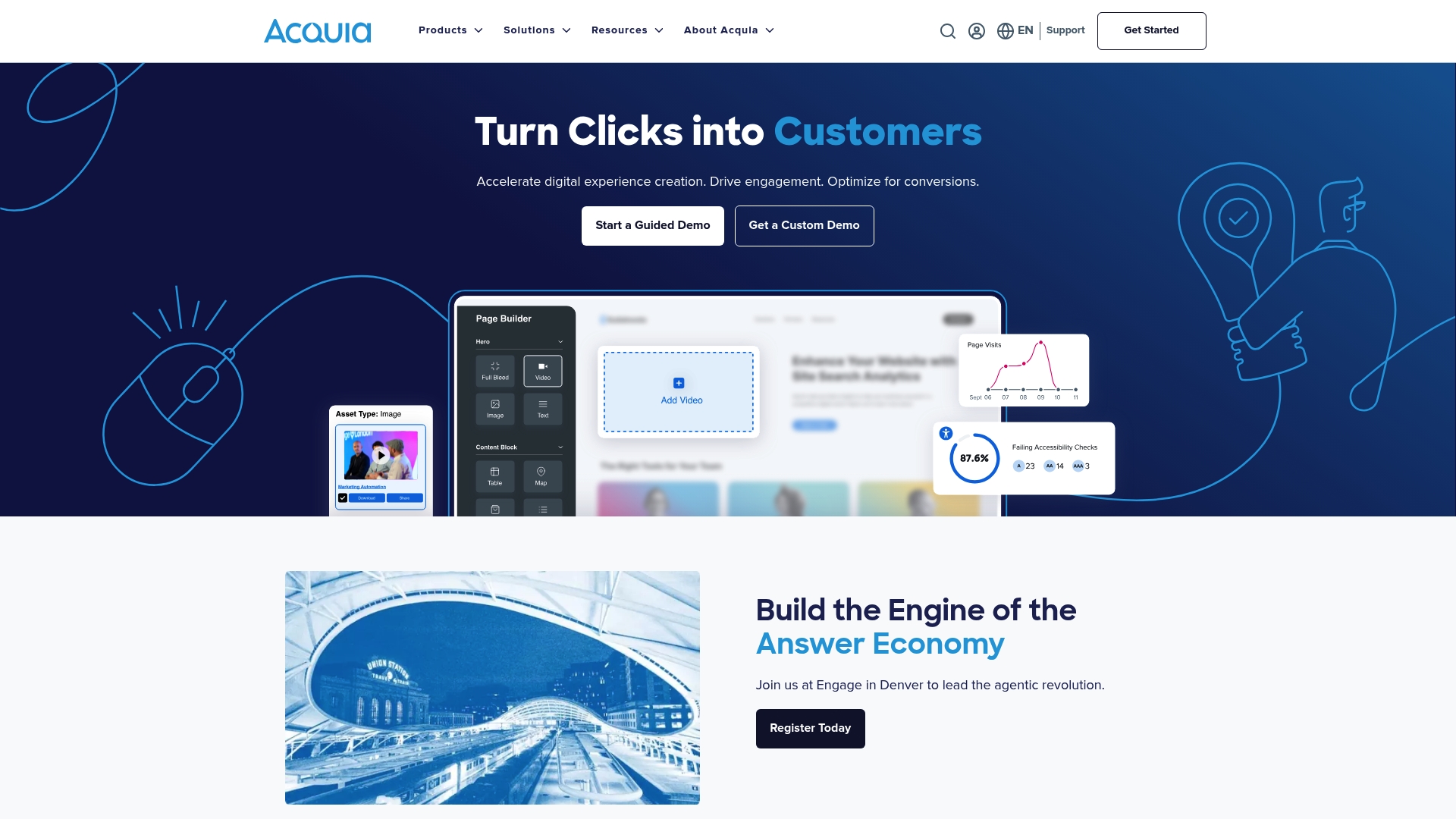
Acquia delivers an all in one digital experience platform that combines content management, marketing, and customer data tools to power personalized experiences at scale. The platform suits medium to large enterprises that need robust capabilities and enterprise grade governance.
Core Features
Acquia centers on content maintenance and delivery, personalized customer journeys, and real time analytics and insights to help teams build and refine experiences. The platform also includes website optimization and accessibility features and multichannel engagement with marketing automation to activate content across channels.
Pros
- Comprehensive platform: The suite groups content management, marketing automation, and analytics so teams avoid swapping systems for core experience tasks.
- Personalization at scale: The platform supports targeted marketing and content delivery that adapts experiences for segments across channels.
- Operational cost benefits: Organizations report cost savings in page updates and site builds because centralized tools reduce repetitive development work.
- Accessibility and performance: Built in optimization and accessibility support help maintain visibility and handle traffic increases without losing compliance focus.
- Industry versatility: The solution offers adaptable modules that serve retail, publishing, and other enterprise use cases effectively.
Cons
- Complex setup: The platform requires significant configuration and integration time, which can delay time to value for teams without dedicated technical resources.
- Unclear pricing: Pricing details are not listed publicly, which creates planning uncertainty and suggests the platform may lean toward higher tier budgets.
- Technical skill requirement: Optimal use often depends on technical expertise, limiting self sufficiency for purely marketing led teams.
Who It’s For
Acquia is aimed at medium to large enterprises seeking a unified platform for content, marketing automation, and customer engagement. It is particularly relevant for organizations using or considering Drupal that need governance, performance, and multi site management across regions or brands.
Unique Value Proposition
Acquia combines enterprise content delivery with data driven personalization and activation in one platform. That integration lets marketing teams orchestrate experiences while IT keeps control of security, scalability, and accessibility standards.
Real World Use Case
A retail brand uses Acquia to create personalized shopping journeys, optimize content for search visibility, and manage multiple websites from a centralized platform. The effort results in more targeted campaigns and increased conversions across channels.
Pricing
Pricing information is not specified on the website. The lack of listed tiers means procurement will require direct contact and may favor larger organizations prepared for enterprise level investment.
Website: https://acquia.com
Contentful
At a Glance
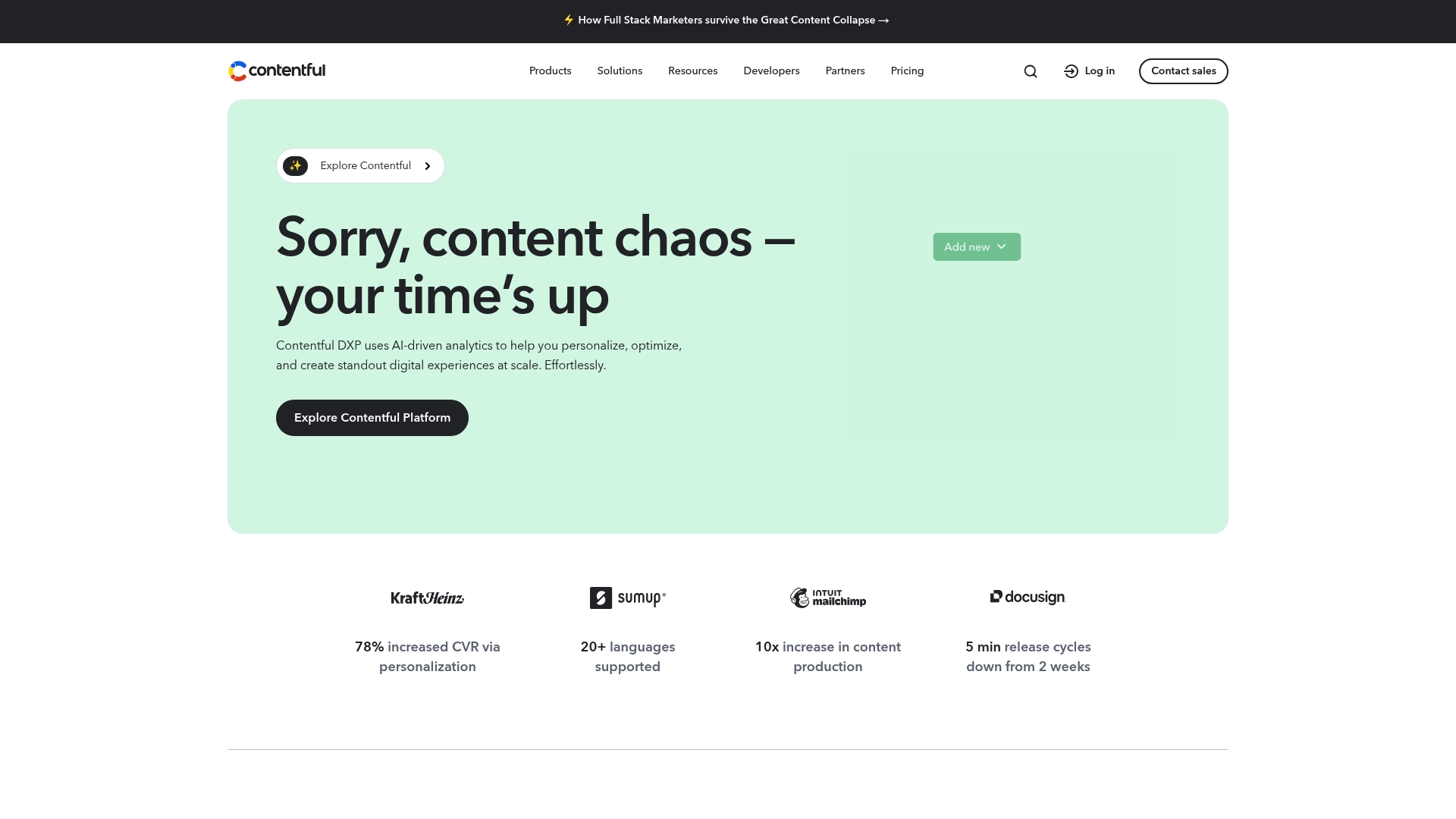
Contentful is a Digital Experience Platform and headless CMS that combines personalization, AI-driven workflows, and developer tools to deliver content across channels and regions. It fits enterprise teams that need scalable content delivery with built-in security and developer-friendly APIs.
Takeaway: Evaluate Contentful if your organization needs centralized content control with marketing autonomy and developer extensibility.
Core Features
Contentful provides a platform for unified content experiences with Studio for visual assembly, Analytics for content performance, and AI Actions for workflow automation. The product supports multi-channel and multi-language distribution and offers no code options for marketing teams.
- Platform for delivering unified content experiences
- Personalization tools for targeted content customization
- AI Actions for automating and streamlining workflows
- Analytics for content performance insights
- Studio for visual experience assembly and design workflows
Takeaway: Map these features to your editorial and localization processes before committing to a full rollout.
Pros
- Comprehensive toolset: The product combines content management, personalization, and automation in a single platform for enterprise needs.
- Global distribution: It supports multi-channel and multi-language content distribution for international teams and campaigns.
- No code support: Marketers can use no code options to build and publish without constant developer intervention.
- Developer-friendly APIs: The robust API and developer tools enable custom integrations and flexible architectures.
- Enterprise security: Security and compliance features match expectations for regulated or high-traffic sites.
Takeaway: The platform balances marketer autonomy and developer control, reducing friction between teams.
Cons
- Pricing is available only on contact which makes it difficult for small teams to budget and plan.
- Implementation and integration require technical expertise which increases initial project cost and timelines.
- The breadth of features can be complex for new users and requires organized governance to avoid content sprawl.
Takeaway: Budget for implementation and governance resources up front to avoid surprises.
Who It’s For
Contentful targets medium to large enterprises, including marketing, product, and developer teams that require scalable, flexible content management and digital experience capabilities. It is well suited for organizations operating global websites, apps, or omnichannel campaigns.
Takeaway: Choose Contentful if you need scale, localization, and integrated developer support.
Unique Value Proposition
Contentful blends a headless CMS with personalization and AI-assisted workflows to let teams deliver contextual experiences without locking content to one channel. The mix of no code Studio and developer APIs offers a rare balance for enterprise organizations.
Takeaway: The platform is most valuable when marketing and engineering share governance and deployment responsibilities.
Real World Use Case
Kraft Heinz uses Contentful to power personalized content delivery across customer touchpoints, improving digital marketing and customer engagement capabilities. That example shows Contentful handling scale and personalization needs for a large brand.
Takeaway: Use this configuration as a model for large consumer brands with diverse channels.
Pricing
Plans are customizable and detailed pricing requires contacting sales for enterprise solutions or specific product modules. Expect a sales conversation to define modules, scale, and support levels.
Takeaway: Contact sales early to align features with budget and implementation scope.
Website: https://contentful.com
Adobe for Business
At a Glance
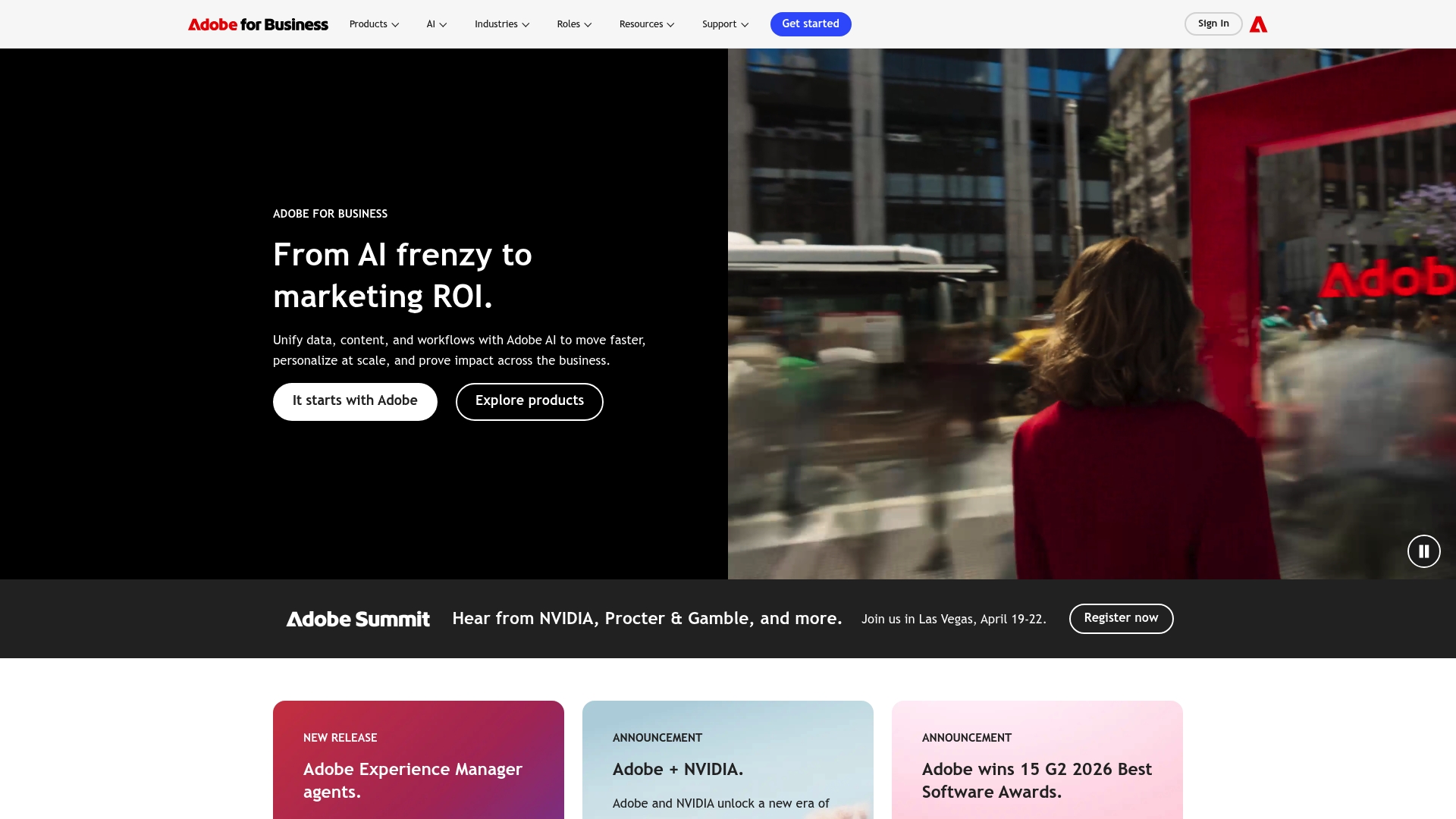
Adobe for Business packages enterprise-grade marketing, content, and analytics tools around Adobe AI to help teams move faster and personalize at scale. The platform suits large organizations that need unified data, content, and automated workflows across channels.
Core Features
Adobe for Business centers on unifying data, content, and workflows with Adobe AI and strong cross-team collaboration. The suite includes tools for personalize at scale, centralized content management, AI-powered tools for content generation, and integrated customer data and analytics for decision making.
Pros
-
Comprehensive enterprise suite: The product covers marketing, content production, analytics, and documents so teams avoid stitching together multiple vendors.
-
Strong AI integration: Built-in Adobe AI supports personalization and automation that reduce manual steps in campaign creation and content generation.
-
Scalable for large organizations: The solution is designed to handle complex, high-volume content production and large customer datasets without breaking workflows.
-
Unified customer experience support: Tools work across channels and platforms so teams can deliver consistent messaging and trace customer journeys.
-
Tools for creative and analytics teams: The platform blends creative production features with analytics capabilities so designers and analysts can collaborate on the same assets.
Cons
-
Complex onboarding and training: The breadth of features creates a steep learning curve that requires dedicated training and governance resources for full adoption.
-
Potentially high cost: Pricing is tailored to enterprise needs which can place it outside the budget for smaller organizations and many startups.
-
Cloud dependency may raise security questions: Relying on cloud infrastructure means security controls and compliance need careful review by IT and security teams.
Who It’s For
Large organizations and enterprises that need integrated solutions for marketing, customer experience, content management, and analytics will find Adobe for Business appropriate. Marketing teams seeking centralized control over personalized campaigns and IT teams requiring enterprise governance will benefit most.
Unique Value Proposition
Adobe for Business combines creative tooling with enterprise analytics and customer data in a single vendor stack. That union lets teams produce creative content while measuring and personalizing at scale without moving data between disparate systems.
Real World Use Case
A global retail brand uses Adobe Experience Platform to unify customer data across regions, personalize marketing communications at scale, and analyze campaign performance to optimize ROI. This setup shortens time from insight to action and standardizes experience across markets.
Pricing
Pricing is not listed publicly and appears to be customized for enterprise requirements. Expect negotiated contracts that reflect usage, modules selected, and integration needs with existing enterprise systems.
Website: https://business.adobe.com
Crownpeak Technology Inc.
At a Glance
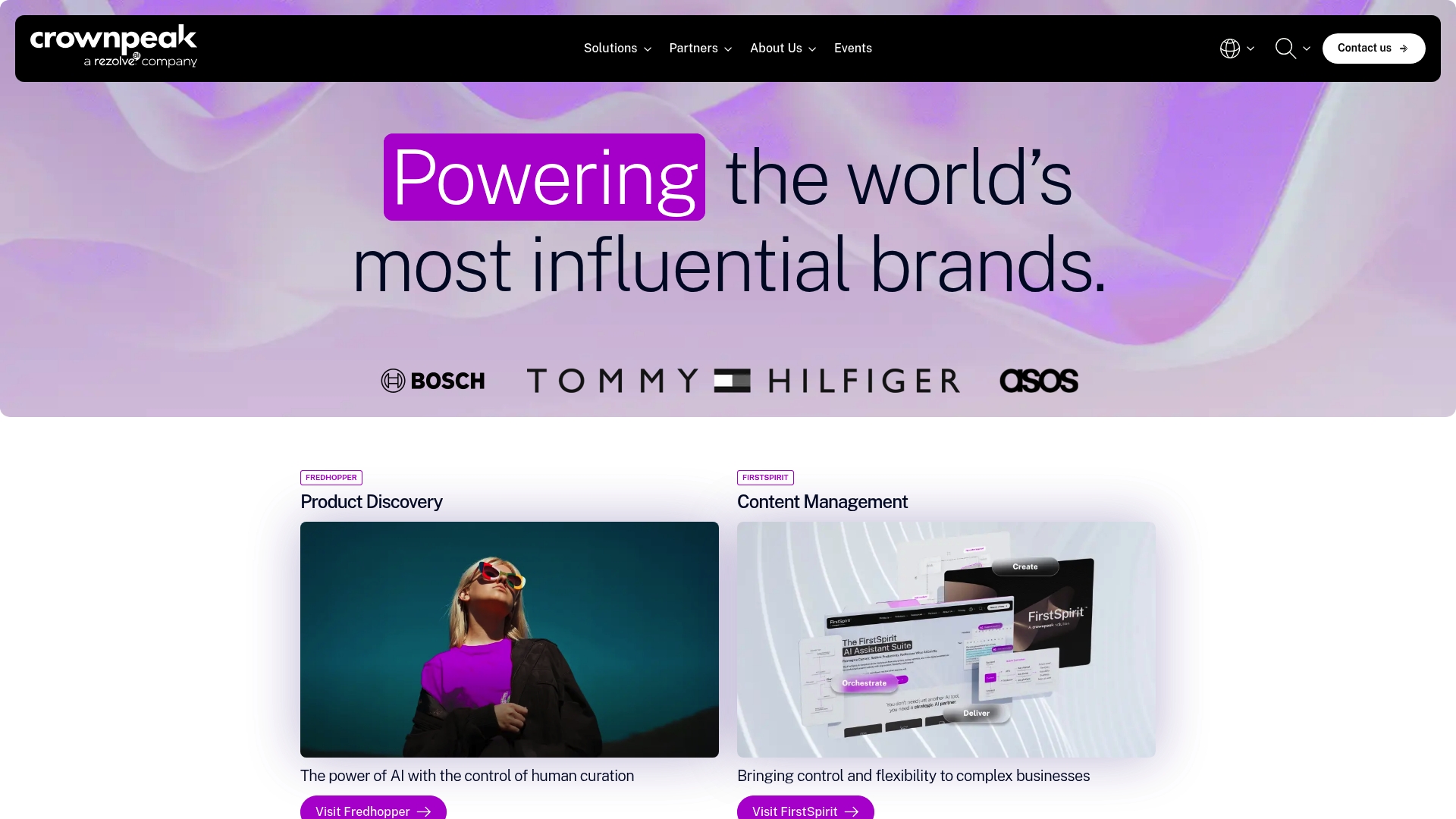
Crownpeak combines FirstSpirit CMS and Fredhopper to serve large brands that need enterprise grade content control and AI driven product discovery. The platform emphasizes accessibility and global scale while keeping marketing autonomy in mind.
This is a strong fit when your team must publish localized, compliant content across many channels quickly. Expect a solution built around enterprise governance and commerce relevance.
Core Features
Crownpeak centers on content management, product discovery, and accessibility capabilities that work together for enterprise needs.
- FirstSpirit CMS for managing complex, multi channel content and localization workflows.
- Fredhopper for AI driven product discovery, search, and personalized recommendations.
- Digital Accessibility tools for quality checks and compliance tracking.
- Shopify Fredhopper App to add AI driven search and recommendations to Shopify stores.
Takeaway: These features target organizations that must manage scale, compliance, and commerce relevance simultaneously.
Pros
- Comprehensive solution set. Crownpeak bundles CMS, product discovery, and accessibility into a single vendor approach, reducing vendor sprawl for enterprise teams.
- AI and human curation. The combination of automated relevance and editorial oversight helps balance personalization with brand control.
- Global presence. Offices in Europe and the US support multinational rollouts and regional compliance needs.
- Extensible partnerships. Integrations such as the Shopify App make it easier to extend Crownpeak into existing ecommerce stacks.
- Accessibility focus. Built in quality and accessibility management supports inclusive experiences and legal compliance efforts.
Cons
- Limited public detail on drawbacks. The public materials do not list specific technical or operational limitations, which makes pre evaluation harder.
- Pricing not disclosed. The website does not provide pricing, so procurement teams must contact sales for cost clarity.
- Potential implementation complexity. The suite appears oriented to large organizations and may require significant integration and governance effort for smaller teams.
Actionable point: Plan a discovery call to uncover technical requirements, integration scope, and total cost of ownership.
Who It’s For
This platform suits large enterprises and influential brands that need centralized content governance, AI enabled commerce features, and rigorous accessibility controls. Marketing teams that need autonomy but must operate within strict IT governance will find this appealing.
Takeaway: If you manage global sites, complex channels, or regulated content, Crownpeak is worth evaluating.
Unique Value Proposition
Crownpeak brings content management, AI driven product discovery, and accessibility into a cohesive offering. That combination lets marketing teams deliver personalized, compliant experiences while IT retains control over performance and security.
Quick read: The product is positioned for scale plus compliance rather than lightweight CMS use.
Real World Use Case
A multinational retailer can use FirstSpirit CMS to publish localized product pages and regional promotions while Fredhopper drives AI powered recommendations and onsite search. The retailer benefits from improved conversion and consistent accessibility across markets.
Outcome focus: Centralized publishing with commerce intelligence.
Pricing
Pricing is not specified on the webpage. Procurement teams should request a tailored quote that reflects content volumes, traffic, and the number of integrations needed.
Website: https://crownpeak.com
Enterprise Content Management Solutions Comparison
Here is a detailed comparative table summarizing key features, target users, and additional aspects for various enterprise content management solutions mentioned in the article.
| Platform | Key Features | Target Users | Pros | Pricing |
|---|---|---|---|---|
| 40Q Agency | Secure WordPress platform with integrated marketing autonomy and governance. | Mid to large enterprises in finance, media, tech. | Enterprise-grade security, fast content updates, integrates with AI and analytics tools. | Pricing depends on implementation scope; contact sales. |
| Acquia DXP | Unified content management, analytics, and marketing automation. | Medium to large organizations leveraging Drupal. | Seamless integration of tools, comprehensive platform, scalability. | Pricing by negotiation; contact sales for details. |
| Contentful | Headless CMS with AI-enhanced workflows and global content deployment capabilities. | Medium to large enterprises with developer collaboration. | Robust API support, no-code tools, cross-language support. | Custom pricing available upon contacting sales. |
| Adobe for Business | Tools for marketing, content management, and customer data handling with AI. | Large enterprises needing end-to-end creative solutions. | AI integration, analytics, uniform experience scaling. | Pricing customized to organization needs; reachable via sales. |
| Crownpeak Technology | CMS and AI-driven tools emphasizing accessibility and commerce. | Enterprises focused on global reach and accessibility. | Integrates commerce with compliance, scalable localization. | No public pricing available; requires direct inquiry. |
This table summarizes the solutions to help businesses compare their offerings and determine the one that aligns with their needs for enterprise-level content management and digital experience optimization.
Empower Your Enterprise Content Management with 40Q
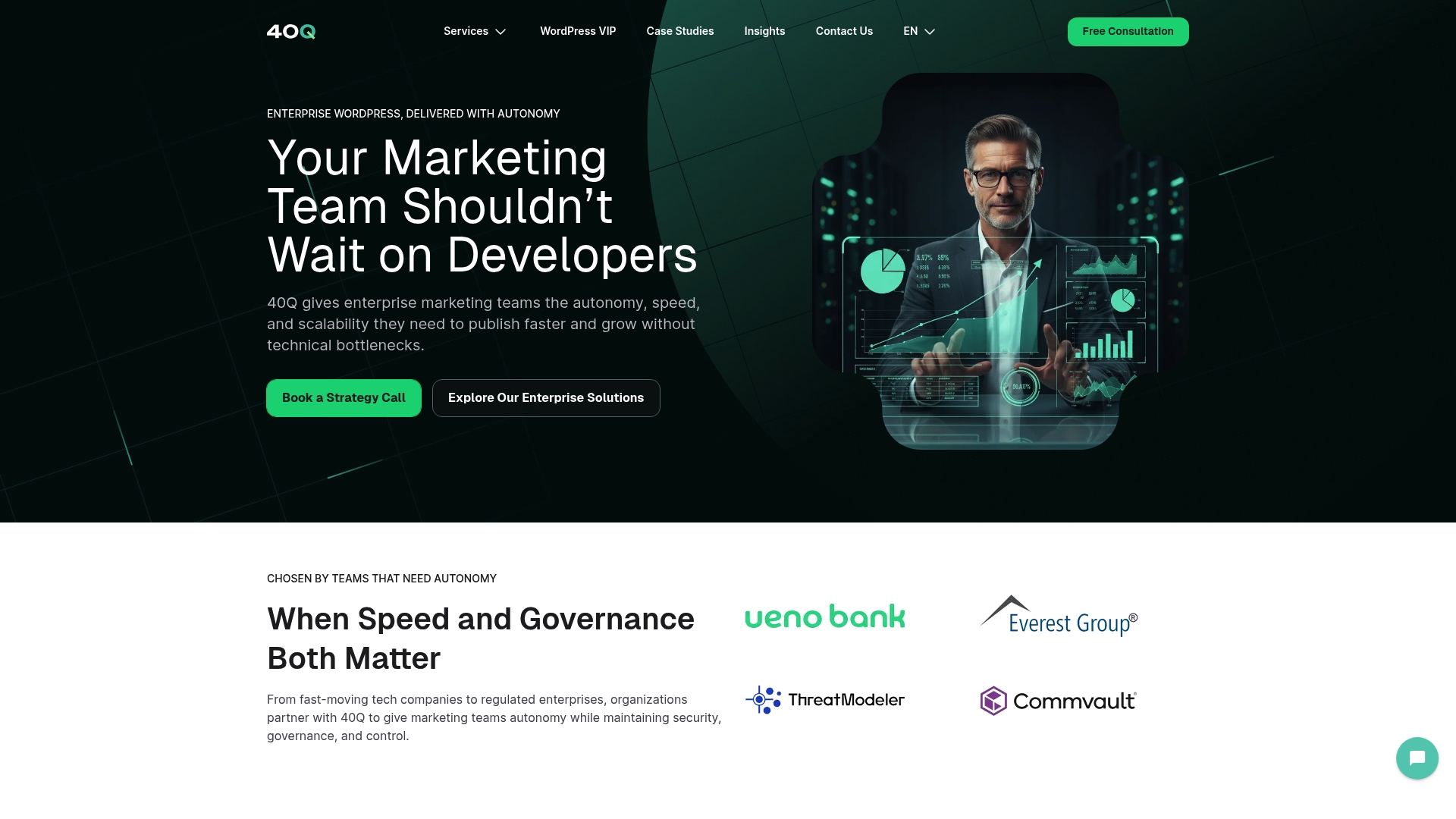
The article highlights how enterprises seek content management tools that blend marketing autonomy with strong governance and security. Pain points like developer dependency, slow content updates, and complex integrations uncover the need for solutions that enable teams to move faster while ensuring IT controls performance and compliance. If you want to eliminate bottlenecks in your publishing workflows and support high-traffic demands without sacrificing reliability, 40Q offers a tailored WordPress platform built precisely for these challenges.
Our proprietary FAS Block System™ empowers marketing teams to launch campaigns, landing pages, and localized content rapidly while IT maintains full control over scalability and enterprise security. Discover how we balance speed to market with technical excellence by visiting 40Q Agency to see why mid and large organizations trust us to remove developer dependency. Take the next step to transform your content operations with enterprise-grade WordPress solutions designed for your growth.
Frequently Asked Questions
What are the top features to look for in a content management tool for 2026?
A powerful content management tool should include features like user-friendly interfaces, robust integration capabilities, and strong security measures. Prioritize tools that also offer scalability and personalization options to meet evolving business needs.
How can I determine which content management tool is right for my team in 2026?
Evaluate your team’s specific requirements, such as the volume of content produced, the need for multi-channel distribution, and user permissions. Conduct a trial run with selected tools to see how they fit into your existing workflows.
What should I consider when budgeting for a content management tool in 2026?
Factor in not only the subscription costs but also potential expenses for training, support, and additional integrations. Estimate a budget that accounts for necessary resources, typically in the range of 10-20% of your total digital marketing spend.
How can a content management tool improve team collaboration in 2026?
A good content management tool enhances collaboration by providing shared access to content, allows for real-time editing, and maintains version control. Use features like comments and task assignments to facilitate communication and streamline project workflows.
What role does data analytics play in content management tools for 2026?
Data analytics in content management tools allows teams to track content performance, understand audience engagement, and make informed decisions. Regularly review analytics reports to optimize your content strategy and improve user experience.
How do I ensure compliance and security with my content management tool in 2026?
Choose a content management tool that offers enterprise-grade security features, including data encryption and compliance monitoring. Regularly audit your system and update protocols to address any new security regulations.
Recommended

Mar 8, 2026
WordPress
Landing page optimization tips for enterprises on WordPress 2026

Mar 13, 2026
WordPress
Why prioritize website security for WordPress in 2026
Jan 19, 2026
WordPress