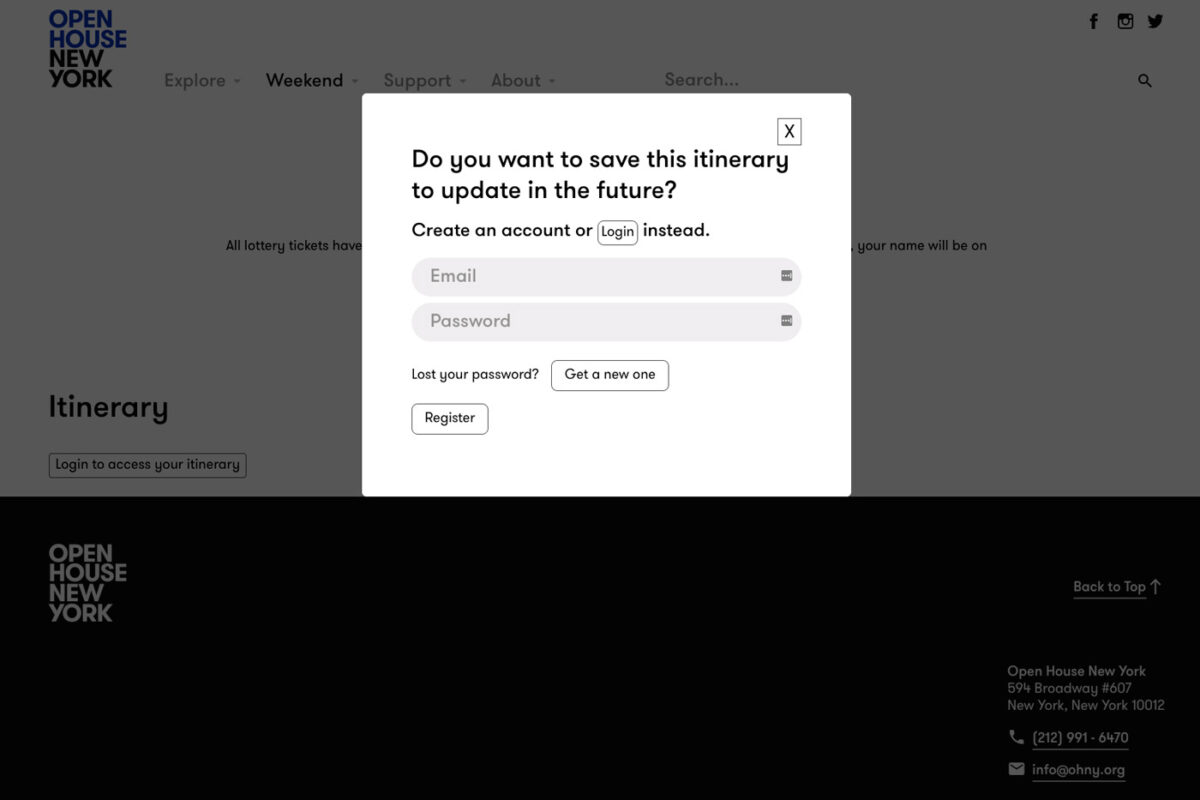
Accounts and Saved Itineraries
Visitors register, bookmark sites and come back to the itinerary they built, on any device.
CASE STUDY
How 40Q rebuilt Open House New York’s visitor planner as a React and TypeScript application embedded in WordPress, adding an interactive map, saved itineraries and a lottery for capacity-limited venues.
Project overview
One WordPress installation running an app-grade planner, an interactive map, visitor accounts and a lottery, without changing how the editorial team works.
Visitors register, bookmark sites and come back to the itinerary they built, on any device.
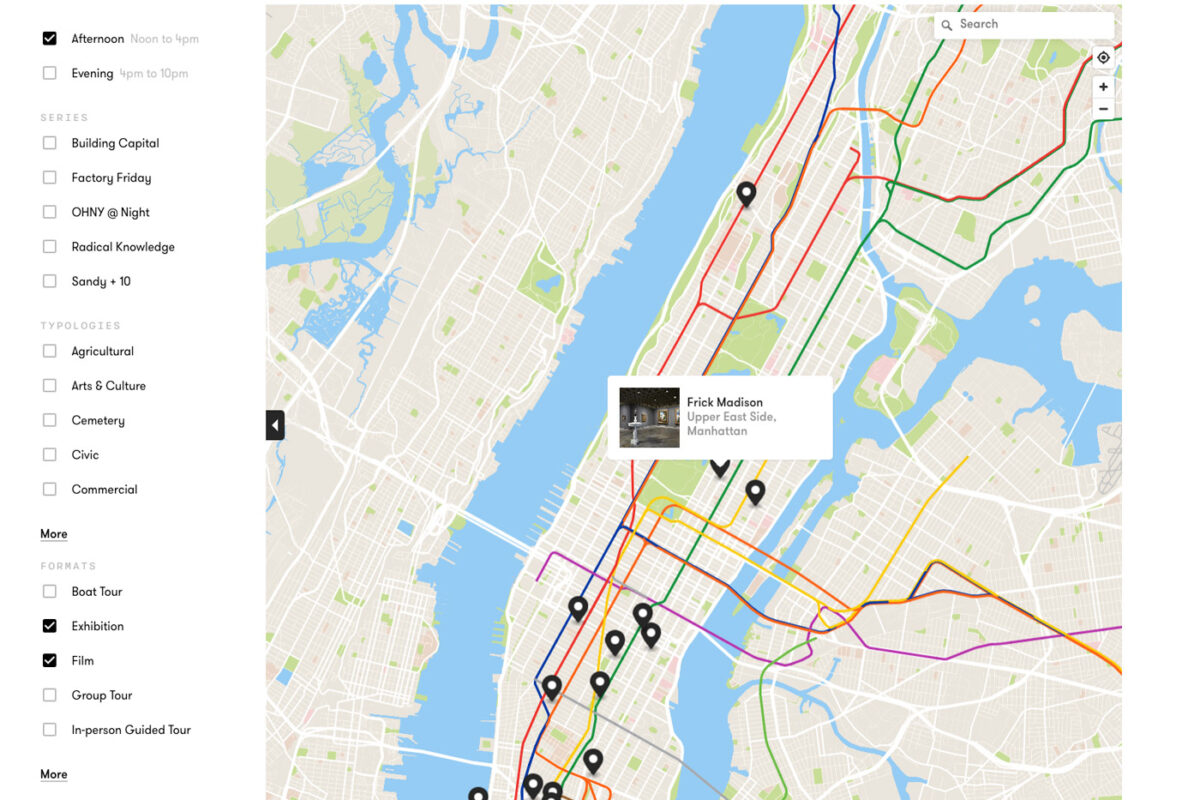
Every site plotted and filterable, turning a programme listing into something you can navigate geographically.
Filtering across the whole catalog is fast enough to explore with, rather than something to wait on.
Capacity-constrained venues are allocated through a fair, automated draw instead of manual coordination.
Bringing an external CMS into WordPress meant the team stopped maintaining content in two places.
The planner and the map work on a phone, which is where most visitors reach for them during the festival weekend.
Thousands of visitors moved through the 2022 planner and many registered to keep their itineraries. Folding an external CMS into WordPress also collapsed two editorial workflows into one.
The problem
Open House New York is an annual weekend festival that invites people of all ages and backgrounds to explore hundreds of historical and architectural sites across the city. For the 2022 edition, the planner behind it had to do considerably more.
Visitors worked through hundreds of listings with nothing to hold their choices. Close the tab and the planning started over.
Filtering the full festival programme was sluggish enough to get in the way of browsing, which is the one thing the planner exists to do.
The programme was a list. Visitors deciding what to see in an afternoon had no way to understand which sites sat near each other.
Some of the most in-demand buildings could only admit a fixed number of people, with no mechanism to allocate those places fairly.
The solution
40Q rebuilt the planner as a modern front-end application inside OHNY’s existing WordPress site, so visitors got app-grade behaviour while the editorial team kept the tools they already knew.

We built the planner in React with TypeScript, embedded in WordPress and talking to it over the API. A hybrid approach: app-like responsiveness on the front end, unchanged publishing behind it.
We built the planner in React with TypeScript, embedded in WordPress and talking to it over the API. A hybrid approach: app-like responsiveness on the front end, unchanged publishing behind it.
OHNY runs a citywide festival from a single WordPress platform, with maps, accounts and capacity management built in. Let’s talk about what your event or catalog needs.