
WordPress
Marketing autonomy guide 2026: 29% revenue boost

José Debuchy
March 4, 2026 | 3 min to read
Marketing leaders know the frustration: campaigns stall waiting for developer capacity, legal reviews crawl through manual checklists, and competitors move faster. Autonomous content workflows promise speed and agility, but without proper compliance and security integration, they create new risks. This guide walks you through the complete implementation process, from foundational prerequisites to measurable outcomes, enabling your team to achieve marketing independence while maintaining enterprise governance and control.
Key takeaways
| Point | Details |
|---|---|
| Prerequisites matter | Establish governance policies, enterprise CMS infrastructure, and cross-team alignment before launching autonomous workflows. |
| AI accelerates compliance | AI-powered compliance reviews work up to 30X faster than manual processes, eliminating launch bottlenecks. |
| Phased rollout wins | Start with pilot campaigns, validate workflows, then scale incrementally with role-based controls. |
| Expected timeline | Measurable ROI and operational improvements typically appear within 3 to 6 months of implementation. |
| Revenue impact | Organizations adopting marketing automation see 29% greater revenue impact compared to traditional workflows. |
Prerequisites for autonomous marketing workflows
Before implementing autonomous workflows, you need solid foundations. Jumping straight to technology without governance policies or team alignment creates chaos, not autonomy.
Start with clear content governance policies. Define who approves what, establish metadata standards, and document approval workflows. These rules protect your brand while enabling speed. Without them, organizational readiness for marketing autonomy suffers.
Next, clarify roles across marketing, legal, and IT teams. Marketing owns content strategy and execution. Legal sets compliance guardrails. IT maintains platform security and performance. When these groups work in silos, bottlenecks multiply.
Your technology stack matters enormously. Choose an enterprise CMS solution enabling marketing independence with built-in compliance capabilities. Look for platforms that support role-based permissions, workflow automation, and AI-powered content review. Generic tools lack the governance features enterprises require.

Finally, prepare your organization for AI adoption. AI-assisted compliance review accelerates approvals by up to 30X versus manual checks, but teams need training to use these tools effectively. Invest time in change management, process documentation, and skill development.
Essential prerequisites checklist:
- Clear content governance policies with documented approval workflows
- Defined roles and responsibilities across marketing, legal, and IT
- Enterprise-grade CMS platform with AI compliance capabilities
- Cross-team alignment on autonomy goals and success metrics
- Training programs for AI tool adoption and workflow changes
Pro tip: Run a governance workshop with all stakeholders before selecting technology. Align on policies first, then choose tools that enforce those policies automatically.
Step-by-step implementation process
With prerequisites in place, follow this practical roadmap to build autonomous workflows that balance independence with compliance.
1. Assess readiness and define governance
Audit your current content operations. Where do delays occur? Which approval steps add value versus friction? Document findings and create governance policies that eliminate unnecessary bottlenecks while protecting brand standards.
2. Select your enterprise CMS platform
Choose a platform designed for autonomy and compliance. An enterprise WordPress platform for marketing autonomy provides the flexibility marketers need with the security and governance IT requires. Evaluate platforms based on workflow automation, role-based access, compliance tools, and scalability.
3. Integrate AI compliance automation
Implement AI-powered pre-publication reviews that check content against brand guidelines, legal requirements, and accessibility standards. These tools flag issues instantly, letting teams fix problems before submission rather than after manual review.
4. Configure role-based access controls
Set up permissions that match your governance policies. Marketing managers approve campaign content. Legal reviews regulatory materials. Developers maintain templates and system configurations. Each role gets exactly the access needed, nothing more.
5. Establish approval workflows
Map content types to appropriate approval paths. Blog posts might need one reviewer. Landing pages for regulated products require legal sign-off. A modern CMS to enable marketer independence automates these workflows, routing content to the right reviewers automatically.
6. Train teams and align stakeholders
Conduct hands-on training for marketing teams on new tools and processes. Brief legal and IT on how autonomous workflows maintain compliance and security. Address concerns proactively.
7. Launch with pilot campaigns
Start small with low-risk content types. Validate workflows, gather feedback, and refine processes before expanding. Successful autonomous marketing projects show measurable ROI and operational improvements in 3 to 6 months, but you need solid foundations first.
8. Monitor and improve continuously
Track metrics like time to publish, approval cycle length, and compliance incidents. Use data to identify bottlenecks and optimize workflows incrementally.
Pro tip: Start with email campaigns or blog content for your pilot. These content types typically have simpler compliance requirements and shorter production cycles, making them ideal for testing autonomous workflows before tackling complex landing pages or regulated content.
Integration of compliance and security
Autonomy without governance creates risk. Smart compliance integration maintains control while enabling speed.
Embed AI-driven compliance automation directly into content workflows. As marketers create content, AI tools check grammar, brand voice, accessibility, legal disclaimers, and regulatory requirements in real time. AI accelerates compliance checks up to 30X, reducing legal risk and content bottlenecks simultaneously.
However, AI introduces its own risks. Algorithms can perpetuate bias, generate inaccurate information, or miss nuanced compliance issues. Combat these problems through robust governance policies. Define clear AI use cases, establish human review checkpoints for high-risk content, and maintain audit trails of all AI decisions.
Continuous monitoring catches problems before they escalate. Automated tools scan published content for compliance drift, broken links, accessibility violations, and security vulnerabilities. Schedule regular audits and address findings promptly.
Align your security and compliance policies with legal and regulatory frameworks relevant to your industry. Financial services face different requirements than healthcare or retail. Work with legal counsel to ensure your autonomous workflows meet all applicable standards.
Cross-team collaboration sustains compliance integrity over time. Marketing, legal, and IT must communicate regularly about policy changes, new regulations, and workflow improvements. Understanding common CMS compliance and security challenges helps teams anticipate and prevent issues.
Compliance integration best practices:
- Deploy AI compliance tools that check content against brand and legal standards automatically
- Create governance policies that define AI use cases and human review requirements
- Monitor published content continuously for compliance drift and security issues
- Maintain detailed audit trails of all content approvals and changes
- Schedule quarterly policy reviews to align with evolving regulations
Pro tip: Schedule quarterly governance reviews with marketing, legal, and IT stakeholders. Regulations evolve, business priorities shift, and workflows need refinement. Regular check-ins keep policies current and teams aligned, preventing compliance gaps before they cause problems.
Common mistakes and troubleshooting
Even well-planned autonomy projects hit obstacles. Recognizing common pitfalls helps you avoid or resolve them quickly.
Many organizations rely too heavily on manual compliance processes. Legal teams review every piece of content line by line, creating massive bottlenecks. Adopt AI compliance tools that handle routine checks automatically, freeing legal experts to focus on complex, high-risk materials.
Siloed workflows between marketing and legal cause friction and delays. Marketing creates content in isolation, then legal rejects it for compliance issues that could have been addressed earlier. Establish cross-functional governance from the start, with clear policies that guide content creation before review.
Outdated content policies create confusion and inconsistency. Governance documents from three years ago don’t reflect current regulations or business needs. Review and update policies regularly, communicating changes clearly to all teams. The CMS role in governance alignment becomes critical here.
Insufficient user training leads to errors and resistance. Marketers struggle with new tools, make mistakes, then blame the technology. Invest in comprehensive training programs, provide ongoing support, and create clear documentation for common tasks.
Technology integration gaps interrupt workflows and frustrate users. Your CMS doesn’t connect to your DAM system, forcing manual file transfers. Your compliance tool lacks API access, requiring duplicate data entry. Address integration requirements during platform selection, not after implementation. Understanding common enterprise CMS challenges helps you plan better.
Critical mistakes to avoid:
- Relying solely on manual compliance reviews instead of adopting AI automation
- Creating siloed workflows where marketing and legal work in isolation
- Neglecting regular policy updates as regulations and business needs evolve
- Skipping comprehensive user training and ongoing support programs
- Ignoring technology integration gaps that create workflow interruptions
Expected results and outcomes
Marketing autonomy delivers measurable business value when implemented correctly. Here’s what to expect.
Timeline matters. ROI and operational gains typically appear 3 to 6 months post implementation. The first month focuses on setup and training. Months two through four involve pilot campaigns and workflow refinement. By month six, most organizations see clear improvements in speed, efficiency, and output quality.
Revenue impact can be substantial. Organizations that embrace marketing automation see 29% greater revenue impact compared to those stuck in manual workflows. Faster campaign launches mean you capture market opportunities competitors miss.
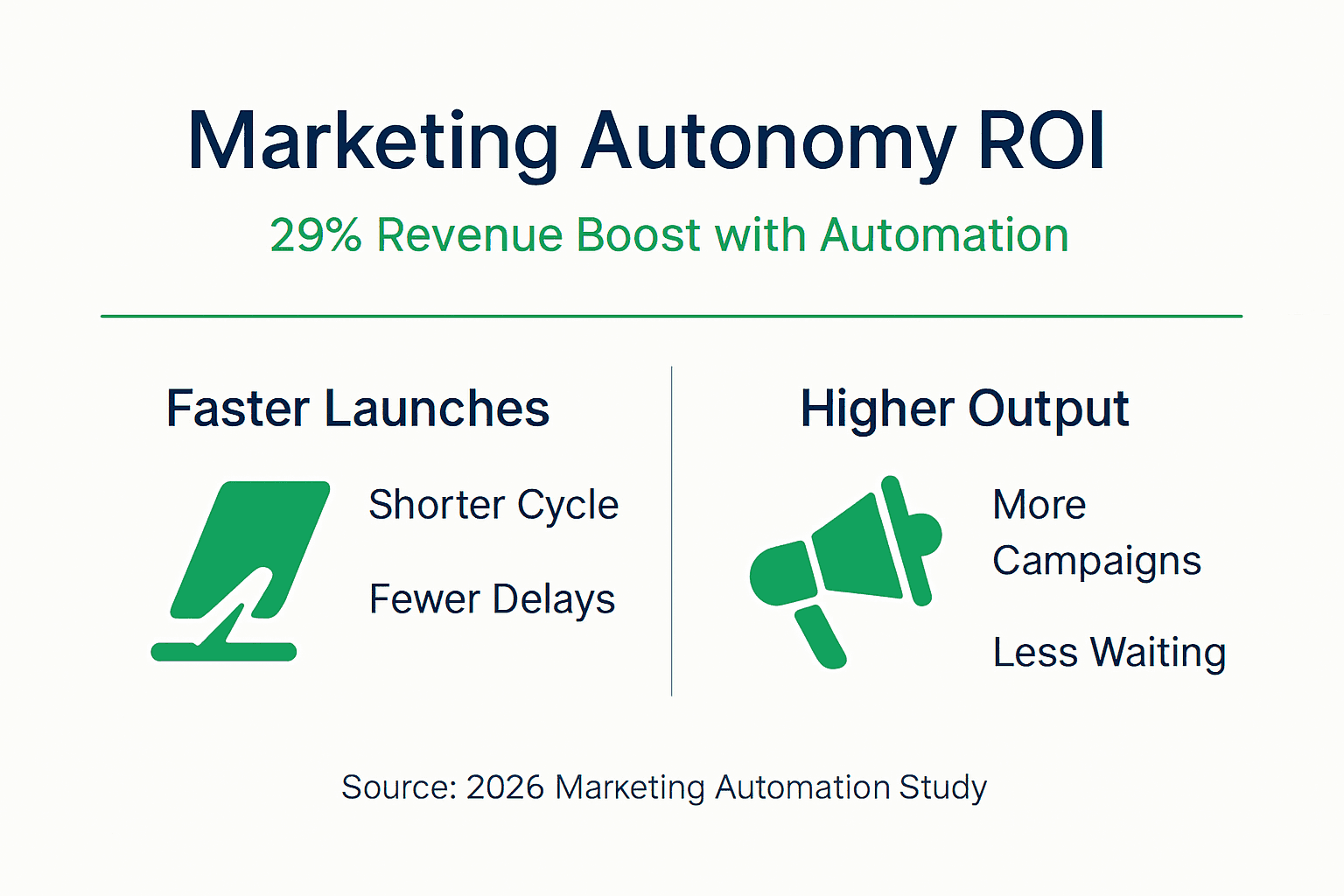
Content production capacity expands significantly. The same study found content demand fulfillment improves by 24% with autonomous workflows. Your team produces more campaigns, landing pages, and localized content without adding headcount.
Developer dependency drops dramatically. Marketing teams launch campaigns independently instead of waiting weeks for developer capacity. IT focuses on platform improvements and strategic initiatives rather than routine content updates.
Track success with clear metrics. Monitor time to publish, approval cycle length, content output volume, compliance incident rates, and campaign performance. Use these measures to refine workflows and demonstrate ROI. Measure marketing autonomy success systematically.
Impact comparison: manual vs AI-powered compliance
| Metric | Manual Process | AI-Powered Process | Improvement |
|---|---|---|---|
| Average review time | 5-7 business days | 4-8 hours | 30X faster |
| Compliance error rate | 12-15% | 2-4% | 75% reduction |
| Legal team capacity | 100% on routine reviews | 70% on strategic work | 30% capacity gain |
| Time to market | 3-4 weeks | 3-5 days | 80% faster |
Empower your marketing autonomy with enterprise WordPress solutions
Achieving the outcomes described above requires the right platform foundation. That’s where 40Q comes in.
We build enterprise-grade WordPress solutions designed specifically for marketing autonomy with uncompromising governance and security. Our proprietary FAS Block System™ gives marketing teams the power to launch campaigns quickly while IT maintains full control over compliance, performance, and scalability.
As a WordPress VIP platform partner for marketing autonomy, we help medium and large organizations eliminate developer bottlenecks for day-to-day publishing. Your marketing teams gain the independence to move fast. Your IT teams retain the governance they need. Our solutions enable content compliance and governance with WordPress at scale, supporting high-traffic, content-heavy organizations that demand both speed and reliability.
Frequently asked questions about marketing autonomy
Recommended
Jan 4, 2024
WordPress
Revolutionizing Higher Education Marketing with WordPress

Mar 10, 2026
WordPress
Scalable hosting for enterprise WordPress success 2026
Jan 19, 2026
WordPress