
WordPress
Why prioritize website security for WordPress in 2026

José Debuchy
March 13, 2026 | 3 min to read
WordPress vulnerabilities have jumped by 68% in just one year, with 333 new security holes recently discovered across plugins and themes. This explosive rise demands immediate attention from marketing and IT leaders managing enterprise websites. Many still treat security as a minor IT checkbox, but that mindset puts revenue, brand reputation, and customer trust at serious risk. This article explains why website security must become a strategic business priority for WordPress enterprises in 2026, covering the evolving threat landscape, the business impact of breaches, and practical security hardening strategies that deliver measurable protection and performance gains.
Key takeaways
| Point | Details |
|---|---|
| Vulnerability surge | WordPress security holes increased 68% in 2026, creating urgent enterprise risk |
| Plugin threats dominate | Vulnerable plugins and weak login security cause over half of all breaches |
| Business impact is massive | Average breach costs $4.45 million while downtime loses $5,600 per minute |
| Hardening delivers results | Comprehensive security reduces attacks by 99.7% and boosts performance 40% |
| Governance ensures sustainability | Treating WordPress as infrastructure with clear ownership prevents long-term risk |
The rising threat landscape for WordPress in 2026
The security environment for WordPress sites has become dramatically more dangerous in 2026. WordPress vulnerabilities have jumped by 68% in just one year, with 333 new security holes recently discovered across plugins and themes. This isn’t a gradual trend but an explosive acceleration that demands immediate strategic response from enterprise leaders.
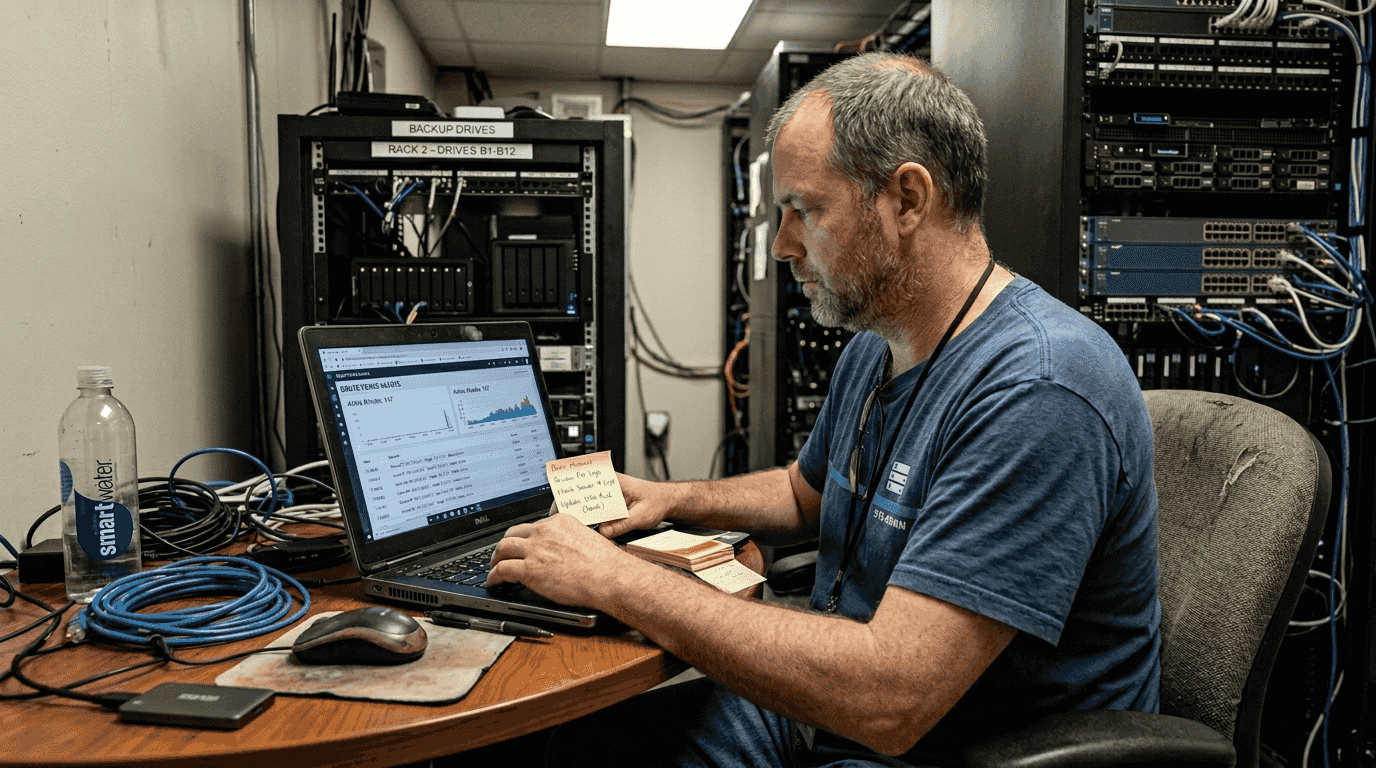
Small to mid-sized businesses face particularly acute danger because attackers recognize their typically weaker defenses. 58% of cyberattacks now hit small and mid-sized businesses because their website security and cybersecurity measures are often weaker. Attackers optimize their efforts by targeting organizations with high-value data but limited security resources, making mid-market enterprises especially vulnerable.
Brute-force login attacks remain one of the most common and successful breach methods. Brute-force login attacks account for roughly 40% of all attempted breaches on WordPress sites. These attacks exploit weak passwords, default admin usernames, and inadequate authentication controls that many organizations still use despite years of security warnings.
Plugin vulnerabilities represent the largest single entry point for attackers. More than half of breached WordPress sites were compromised through vulnerable plugins that either contained known security flaws or lacked proper security updates. The plugin ecosystem’s openness creates tremendous functionality benefits but also introduces significant risk when organizations fail to maintain strict plugin governance.
Marketing and IT leaders must understand these threats aren’t theoretical possibilities but active, evolving dangers targeting WordPress sites every day. The WordPress security checklist 7 essentials provides a foundation for addressing these vulnerabilities systematically. The question isn’t whether your organization will face these attacks but whether your defenses can withstand them when they arrive.
Pro Tip: Implement automated vulnerability scanning that alerts your team within hours of new plugin or theme vulnerabilities being disclosed, giving you time to patch before attackers exploit them.
Why enterprise WordPress sites must treat security as a business imperative
Security directly impacts revenue through multiple channels that marketing and IT leaders control. The average data breach now costs $4.45 million, and for eCommerce WordPress sites, every minute of downtime means more than $5,600 in lost revenue. These aren’t abstract numbers but real financial consequences that destroy quarterly targets and damage long-term business viability.
Website security affects SEO rankings and customer trust in ways that directly influence sales performance. Search engines penalize compromised sites with ranking drops that can take months to recover. Customers who encounter security warnings or breach notifications rarely return, creating permanent revenue loss that extends far beyond the immediate incident.
Many leaders still treat security as an IT issue, even though it directly affects sales, search rankings, and customer trust.
This mindset creates dangerous organizational blind spots where security receives inadequate resources and attention until a crisis forces reactive spending at much higher cost.
The root causes of WordPress security failures often stem from governance and configuration issues rather than WordPress core vulnerabilities. Security incidents, performance collapses, and SEO losses usually stem from plugin sprawl, cache-by-accident setups, and lack of ownership, not from WordPress core. Organizations that blame the platform miss the real problem, which is inadequate operational discipline and unclear accountability.
Marketing leaders need to champion WordPress security crucial marketing teams 2026 as a cross-functional business priority that requires collaboration between marketing, IT, and security teams. When marketing treats website management as purely creative work while IT views it as purely technical infrastructure, the gap between these perspectives creates vulnerability.
Effective security governance prevents risk accumulation that compounds over time. Each new plugin, each configuration change, and each new user account either strengthens or weakens your security posture. Organizations that lack clear processes for evaluating and approving these changes gradually accumulate risk until a breach becomes inevitable. The security website development enterprise wordpress approach embeds security considerations into every development decision rather than treating them as afterthoughts.
Business continuity depends on security resilience that protects against both external attacks and internal mistakes. The financial and reputational stakes for enterprises are enormous, making security investment one of the highest ROI decisions leadership can make. Understanding social proof ecommerce trust sales dynamics shows how quickly customer trust evaporates after security incidents, creating long-term revenue impact that far exceeds immediate breach costs.
Security hardening and its game-changing benefits for WordPress enterprises
Security hardening represents a fundamentally different approach than typical security plugin installations. Hardening changes the underlying configuration of WordPress, the web server, and the hosting environment to eliminate entire categories of attack, unlike security plugins that add monitoring and firewalls. This proactive prevention stops attacks before they reach your site rather than trying to detect and block them in progress.
Implementing comprehensive security hardening measures is essential for website survival and business continuity. The approach addresses vulnerabilities at multiple layers including WordPress core configuration, server security settings, database hardening, and hosting environment controls. Each layer provides defense in depth that makes successful attacks exponentially more difficult.
The measurable benefits of security hardening are remarkable. Security hardening reduces successful attack rates by 99.7% while improving site performance and reliability by 40%. These aren’t marginal improvements but transformative results that justify the implementation investment many times over through reduced breach costs and improved operational efficiency.
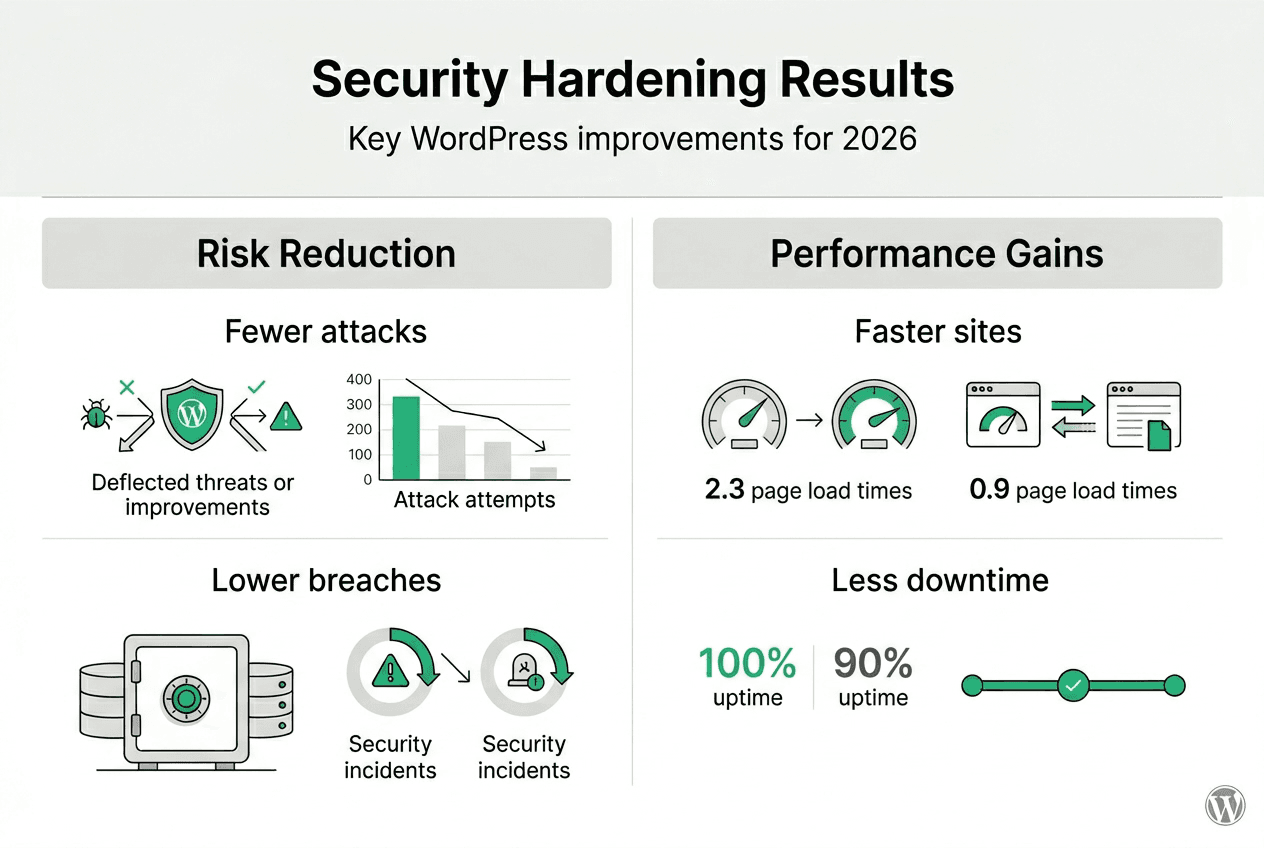
Practical hardening examples include disabling XML-RPC and REST API endpoints that aren’t actively needed, enforcing strong authentication with two-factor requirements, tightening file permissions to prevent unauthorized modifications, removing version information that helps attackers identify vulnerabilities, and implementing strict Content Security Policy headers that block malicious script injection.
| Security Approach | Attack Prevention | Performance Impact | Implementation Complexity |
|---|---|---|---|
| Security Plugins Only | Reactive detection and blocking | Can slow site with scanning overhead | Low, install and configure |
| Basic Hardening | Proactive elimination of common vulnerabilities | Neutral to slight improvement | Medium, requires technical knowledge |
| Comprehensive Hardening | Prevents 99.7% of attacks across multiple layers | 40% performance and reliability gain | High, needs expert implementation |
Hardening establishes a security foundation that reduces operational risk and creates business continuity confidence. When marketing teams know their website can withstand attacks without emergency downtime, they can plan campaigns and launches with greater certainty. When IT teams have eliminated entire vulnerability categories, they spend less time firefighting and more time building value.
The how to secure wordpress enterprise grade methodology combines technical hardening with operational processes that maintain security over time. Initial hardening provides immediate protection, but sustained security requires ongoing discipline to prevent configuration drift and new vulnerabilities from accumulating.
Pro Tip: Schedule quarterly security audits that review not just patches and updates but also configuration drift, permission changes, and new attack vectors that have emerged since your last hardening review.
Governance and operational discipline: running WordPress as infrastructure
WordPress succeeds at enterprise scale when organizations treat it as critical infrastructure rather than just software. Teams that run it as a governed system with clear boundaries, ownership, and operational discipline achieve stability, performance, and long-term ROI. This mindset shift transforms WordPress from a source of risk and frustration into a reliable platform that supports business growth.
A governed WordPress system includes clear responsibility assignments that eliminate the dangerous ambiguity about who owns security, performance, and reliability. Marketing teams need autonomy to publish and launch campaigns quickly, but that autonomy must operate within boundaries that protect security and performance. IT teams need control over infrastructure and security without becoming bottlenecks that slow marketing execution.
Operational discipline prevents the common issues that plague WordPress sites at scale. Plugin sprawl happens when teams install solutions without evaluating alternatives or removing unused plugins. Accidental cache conflicts emerge when multiple caching layers interact unpredictably. Unclear ownership means problems go unaddressed until they create crises. These aren’t technical failures but process failures that governance solves.
At scale, architecture, security, and process matter more than the CMS itself. The platform provides capabilities, but governance determines whether those capabilities create value or risk. Organizations that invest in governance frameworks see dramatically better outcomes than those that focus solely on technical solutions.
Key governance best practices for enterprise WordPress include:
- Implement controlled change management where all plugin installations, theme updates, and configuration changes go through approval workflows that evaluate security and performance impact before deployment.
- Conduct regular security and performance audits on quarterly schedules that review not just current state but also trends and emerging risks that require proactive response.
- Establish cross-team collaboration rituals like monthly security reviews where marketing, IT, and security teams share insights and align on priorities rather than working in silos.
- Define clear escalation paths and incident response procedures so everyone knows exactly what to do when security alerts or performance issues arise, eliminating confusion during critical moments.
- Document security and performance standards that new team members and external vendors must follow, creating consistency and reducing the risk of well-intentioned mistakes.
These governance steps yield scalable, secure, and reliable web platforms that deliver high ROI over multi-year timeframes. The security website development enterprise wordpress approach embeds these governance principles from the start rather than trying to retrofit them after problems emerge.
Pro Tip: Create a simple one-page security and performance scorecard that tracks key metrics monthly, making it easy for leadership to see trends and intervene before small issues become major problems.
Enhance your WordPress security with 40Q
Your WordPress platform deserves the same security rigor you apply to other critical business infrastructure. 40Q offers tailored enterprise WordPress security and performance services designed specifically for marketing and IT leaders who need both speed to market and uncompromising protection. Our enterprise-grade wordpress empowerment approach combines technical excellence with operational governance that scales with your business.
We implement comprehensive security hardening, ongoing monitoring, and robust governance frameworks that transform WordPress sites into secure, high-performing platforms supporting sustainable growth. Our security for enterprise wordpress websites services address the full spectrum from initial assessment through implementation and ongoing management. Whether you need immediate security improvements or long-term strategic partnership, our team brings WordPress VIP expertise and proven methodologies. The WordPress security checklist 7 essentials we’ve developed guides hundreds of enterprise implementations, delivering measurable security and performance improvements that protect your business while enabling marketing autonomy.
Frequently asked questions
Recommended
Jan 17, 2026
WordPress
7 Essential Tools for Website Performance Monitoring List

Apr 5, 2026
WordPress
Website traffic scalability: frameworks and enterprise strategies

Feb 26, 2026
WordPress