WordPress
How to Empower Content Teams with a Modern CMS

Eddie Wise
October 21, 2025 | 3 min to read
In enterprise organizations, marketing teams are under pressure to move faster than ever — to publish content, launch campaigns, and optimize performance across multiple channels. Yet too often, their greatest limitation isn’t creative bandwidth or strategy. It’s the CMS.
A modern content management system should remove friction, not create it. It should allow content teams to work independently while giving developers the control they need to ensure scalability, governance, and brand consistency. Striking that balance has traditionally been difficult. But with the right architecture, it’s entirely possible to achieve both.
Here’s how a modern CMS — particularly one built on flexible, enterprise-grade WordPress — can empower content teams to operate with true autonomy while still meeting the technical and governance standards of a large-scale digital organization.
Marketers want speed. Developers want scalability.
The tension between these two priorities is the root of most CMS frustrations. Marketing leaders want the freedom to launch content quickly, test ideas, and adapt to market trends. Developers, on the other hand, want a platform that’s secure, stable, and architected for long-term performance.
In legacy CMS setups, one side typically wins at the expense of the other. Systems designed for marketing agility often struggle under enterprise complexity — multiple sites, multilingual content, regional compliance requirements. Conversely, systems built for technical control tend to slow down marketers, trapping them in ticket queues and rigid workflows.The key is a shared foundation: a CMS flexible enough for marketers to self-serve, but structured enough for developers to trust. Modern WordPress-based enterprise stacks, when implemented correctly, do exactly this — blending intuitive publishing tools with developer-grade extensibility and governance.
The key is a shared foundation: a CMS flexible enough for marketers to self-serve, but structured enough for developers to trust. Modern WordPress-based enterprise stacks, when implemented correctly, do exactly this — blending intuitive publishing tools with developer-grade extensibility and governance.
1. Easy, intuitive publishing interfaces
Empowerment starts with usability. If your CMS requires a developer to launch a basic landing page or update a headline, your teams will always lag behind your competitors. A modern CMS eliminates that dependency through intuitive interfaces designed for non-technical users.
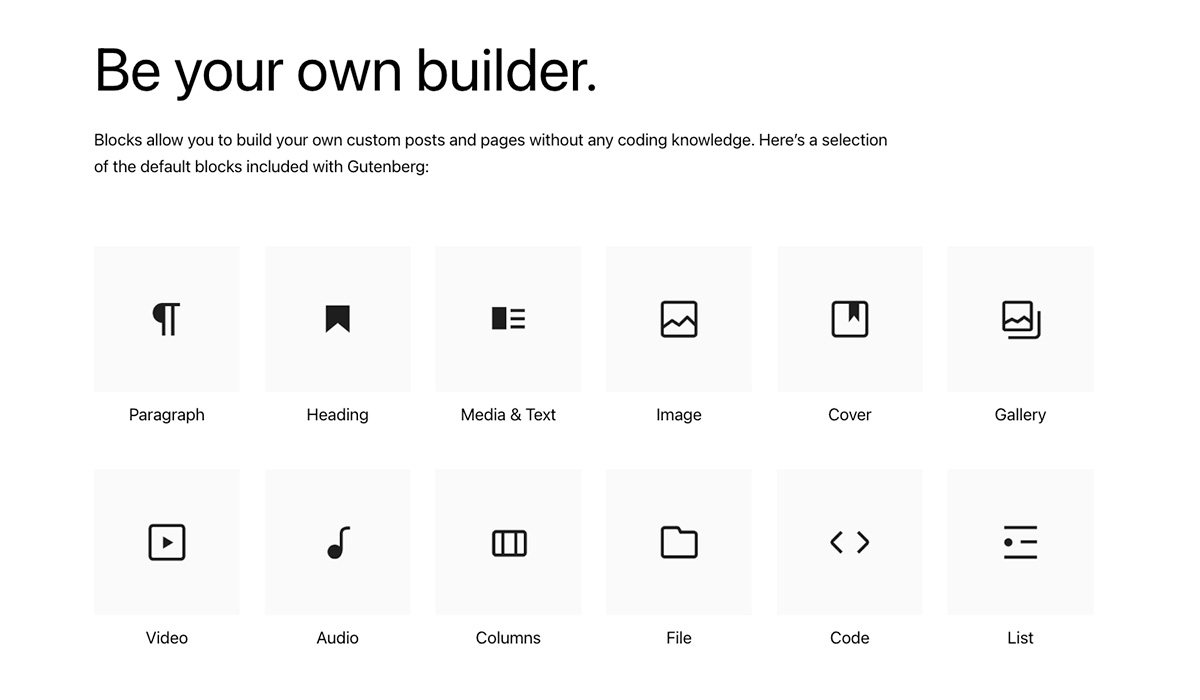
With block-based editing, content creators can build complex layouts using pre-approved design components that stay on brand. Drag-and-drop interfaces, real-time previews, and template libraries let marketers create and publish in hours, not days. At the same time, developers can define the structure of those blocks to ensure every page adheres to design and accessibility standards.
The result is a system where creativity doesn’t come at the cost of consistency — and where developers no longer have to serve as gatekeepers for every minor content update.
2. Role-based permissions and governance
Freedom without control leads to chaos. In large organizations, maintaining governance — across teams, business units, and regions — is essential. A modern CMS gives marketing teams autonomy while still enforcing the right checks and balances through role-based permissions and structured workflows.
Editors can draft, revise, and schedule content independently, while compliance or legal teams can review and approve within the same platform. Access levels ensure that global brand managers can oversee without micromanaging, and local teams can tailor content for their specific markets without risk to the parent brand.This balance of distributed ownership and centralized control allows content to flow faster through the organization — safely, securely, and in full alignment with brand and legal standards.
3. Tools that remove bottlenecks
Even the best interfaces and permissions can’t help if the underlying processes remain slow. That’s where automation and intelligent tooling come in. Modern CMS platforms now embed features that anticipate user needs and remove manual steps from everyday workflows.
For example:
- AI-assisted content tools can suggest SEO titles, summarize long posts, and automatically tag taxonomy terms.
- Content scheduling and version control ensure visibility into what’s live, what’s coming, and who changed what.
- Integrated media libraries and DAM connectors make it simple to find approved visuals without leaving the CMS.
- Preview and staging environments allow editors to test layouts and campaigns before publishing — without involving developers.
Together, these features drastically reduce dependence on technical teams. Marketers can ideate, create, and launch at their own pace. Developers, freed from constant support tasks, can focus on building performance enhancements, integrations, and product features that create real business value.
4. Scalable frameworks for enterprise growth
Empowering content teams isn’t just about giving them tools — it’s about giving them confidence that the platform can grow with their ambitions. A CMS that crumbles under traffic spikes or requires painful migrations to add new sites is not empowering; it’s limiting.
Modern frameworks built on enterprise WordPress combine scalability and simplicity. Hosting environments like WordPress VIP provide the infrastructure to handle millions of visits per day with consistent uptime, while also offering the flexibility to spin up microsites, regional subsites, or campaign pages in minutes.
That means marketing can scale initiatives across markets or brands without waiting for major development cycles — all within a secure, governed environment IT can trust.
5. Collaboration across teams and disciplines
True empowerment doesn’t just mean publishing faster; it means aligning cross-functional teams around shared goals. The CMS should act as a collaborative workspace — where marketers, developers, designers, and legal reviewers can each do their jobs without blocking one another.
In practice, this means:
- Developers manage code and component updates through CI/CD pipelines.
- Designers define reusable patterns in the design system.
- Editors and marketers work within a structured library of those approved assets.
- Reviewers can track changes, approve versions, and maintain audit trails.
A modern CMS becomes the single source of truth for your digital experience — connecting creative, technical, and operational teams into one seamless publishing ecosystem.
The business impact of empowerment
When content teams are empowered, everything accelerates: campaign velocity, SEO growth, brand consistency, and even employee satisfaction. Marketing teams move from “waiting on dev” to “shipping same day.” Developers move from constant maintenance to high-value innovation. Leadership sees measurable improvements in time-to-market and reduced operational cost.
Empowerment is not just a productivity win — it’s a competitive one. In fast-moving markets, organizations that can ideate, create, and deploy digital experiences instantly will always outpace those bound by legacy systems and outdated workflows.
Building toward a future-proof foundation
At 40Q, we call our approach Autonomy for WordPress — an engineered framework that gives enterprises both freedom and control. It includes:
- A modern, Roots-powered theme architecture with reusable content blocks.
- AI-enabled admin tools that accelerate publishing and quality control.
- Role-based governance and workflow automation for global organizations.
- Enterprise integrations for CRM, MAP, and DAM systems.
- Ongoing observability and monitoring for performance and security.
In short: it’s how we help marketing and technical teams align around the same goal — delivering better digital experiences, faster.
Empower your content teams today
If your CMS still requires developer tickets for every change, if publishing new content feels like an uphill climb, or if governance is slowing your teams instead of protecting them, it’s time to modernize.
The next generation of CMS platforms is already here — open, flexible, and built to empower every role in your digital organization.
Apr 9, 2024
WordPress
Start Using Gutenberg and Convert your Site into a Lead Generation Tool
Aug 21, 2024
WordPress
FAS™ and Gutenberg
Jan 19, 2026
WordPress