WordPress
Top 6 Best Marketing Automation Platforms 2026

José Debuchy
April 1, 2026 | 3 min to read
Choosing the right marketing automation platform can shape the success of any campaign. Some offer advanced features while others focus on making everyday tasks simple. With so many options available it can be tough to make a confident choice. The perfect fit should save you time and remove headaches from the process. Each platform brings its own set of surprises and clever solutions. Looking closer at the best options reveals unique tools and ways to connect with your audience. Which one will feel like the missing piece you have been searching for
Table of Contents
40Q Agency
At a Glance
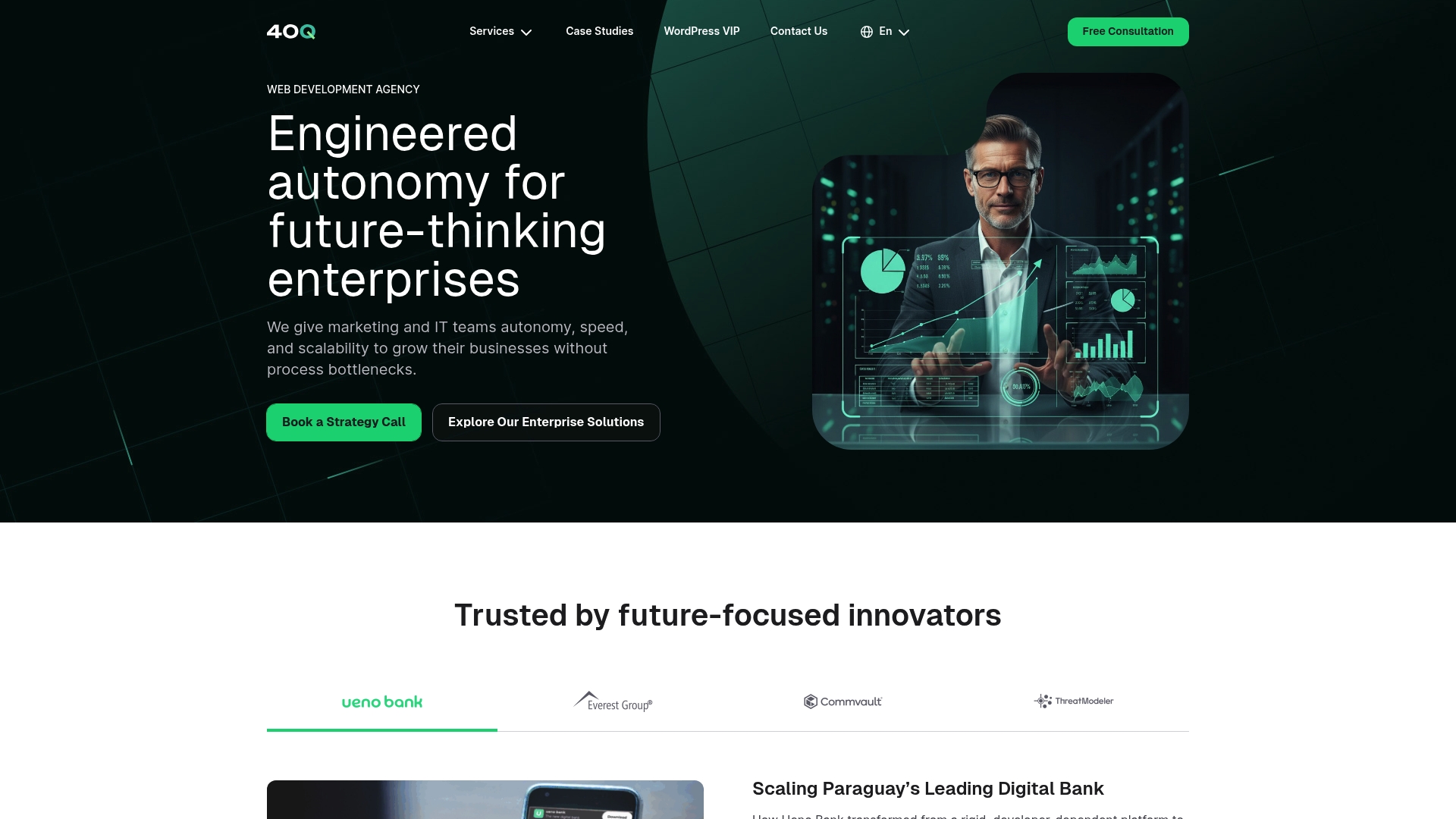
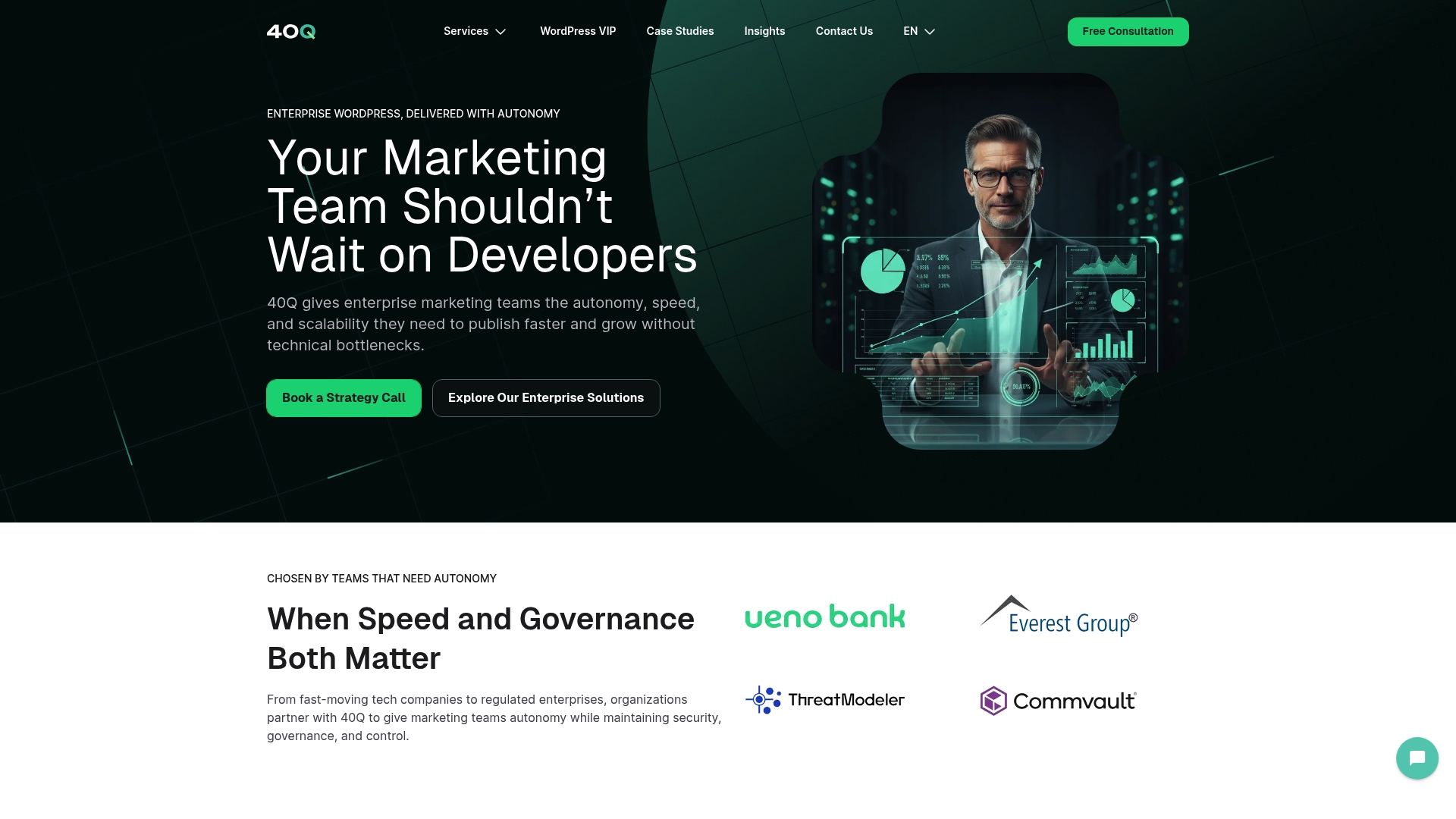
40Q Agency builds enterprise-grade WordPress platforms that give marketing, IT, and product teams clear operational autonomy while keeping governance and security tightly controlled. This is the top-tier choice for organizations that need fast time to market without adding developer overhead.
Core Features
40Q delivers customizable platforms with marketing autonomy and governed editorial workflows alongside support for both traditional and headless WordPress architectures. The platform includes seamless integrations with CRM, MAP, analytics, AI, and automation tools plus localization and governance workflows and enterprise-grade security protections with audit trails.
Pros
-
Specialized in enterprise WordPress solutions. The team focuses on large scale implementations tailored to complex organizational requirements.
-
Empowers marketing and IT teams with autonomy. Marketing teams gain the ability to publish campaigns and localized content without developer dependency.
-
Strong security and compliance features. Protected environments and audit trails help meet internal governance and external regulatory needs.
-
Customizable and scalable platform architectures. Support for traditional and headless setups lets architects design for performance and future growth.
-
Trusted by notable clients in various industries. Case examples show the agency handles high traffic and content heavy sites reliably.
Who It’s For
This is a fit for enterprises and large organizations that require a secure, scalable digital platform built on WordPress. Marketing, IT, and product teams at banks, large B2B vendors, and research firms will get the most value from 40Q’s focus on autonomy, governance, and integrations.
Unique Value Proposition
40Q outperforms typical web agencies by combining deep WordPress engineering with enterprise controls and a marketing first mindset. Teams gain a platform that supports rapid campaign launches, global brand consistency through localization workflows, and tight security protections that IT and compliance teams can trust. This combination reduces developer bottlenecks while preserving enterprise governance and long term maintainability.
Real World Use Case
Ueno Bank moved from a developer dependent website to a marketing empowered digital experience using 40Q. The result was faster campaign launches, clearer brand presentation, and measurable improvements in operational efficiency without sacrificing security or performance.
Pricing
Pricing is not specified publicly and is provided as custom quotes based on project scope and enterprise requirements. Expect solution design and implementation costs to reflect the level of customization, integrations, and governance needed.
Website: https://40q.agency
HubSpot
At a Glance
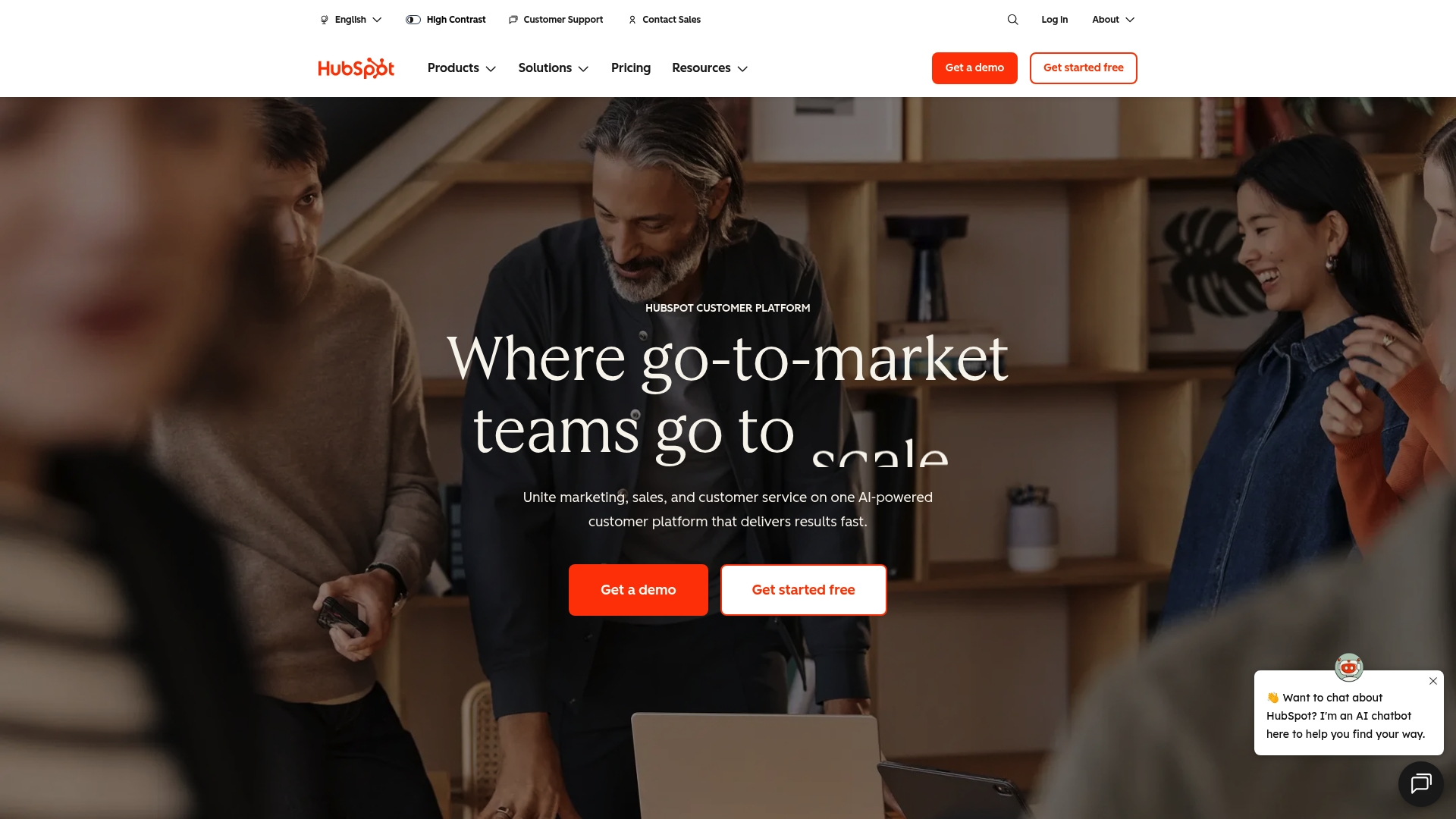
HubSpot is an all in one, AI powered CRM and marketing platform that connects marketing, sales, and service into a single system. For marketing leaders at medium to large enterprises it delivers broad capability and deep integrations but it can feel complex and will require dedicated resources for full value.
Core Features
HubSpot centralizes connected data across Marketing Hub, Sales Hub, Service Hub, Content Hub, Data Hub, Commerce Hub, and a Smart CRM. The platform includes AI tools such as Breeze AI tools and Breeze Agents and integrates with over 2,000 apps to automate workflows and surface analytics.
Pros
- Comprehensive platform: HubSpot combines marketing, sales, and service tools so teams operate from the same customer record.
- Strong AI capabilities: Breeze AI tools and Breeze Agents automate routine tasks and scale campaign personalization.
- Extensive integrations: The ecosystem connects with over 2,000 applications so you can align email, commerce, and analytics stacks.
- Proven track record: A large customer base and published case studies show results across company sizes.
- Free entry point: Free tools and a free CRM enable pilots and smaller proofs without upfront licensing fees.
Cons
- Platform complexity: The breadth of features can overwhelm new users and requires governance and training.
- Pricing opacity: Pricing details are not prominent on the landing page and premium tiers can be expensive for some teams.
- Setup and learning curve: Several advanced features need substantial configuration and time before delivering measurable returns.
Who It’s For
HubSpot suits businesses that need integrated marketing, sales, and customer service systems and want to use AI and a broad integration set. Marketing leaders at medium to large enterprises will gain the most when they allocate technical and operational resources to rollout and governance.
Unique Value Proposition
HubSpot offers a unified platform that ties customer data and automation across functions so teams share a single source of truth. That combination of unified data, AI tools, and a large integration ecosystem helps reduce tool sprawl when the organization commits to platform governance.
Real World Use Case
A mid sized company uses HubSpot to unify customer profiles, automate lead nurturing sequences, and route qualified leads to sales, which accelerates deal cycles and improves follow up. Marketing and support teams then use the same data to personalize campaigns and resolve issues faster.
Pricing
HubSpot provides free tools and a free CRM alongside premium plans for specific Hubs and enterprise needs. Detailed pricing is available via HubSpot’s pricing pages and costs vary by product selection, seats, and usage.
Website: https://hubspot.com
Adobe Creative Cloud
At a Glance
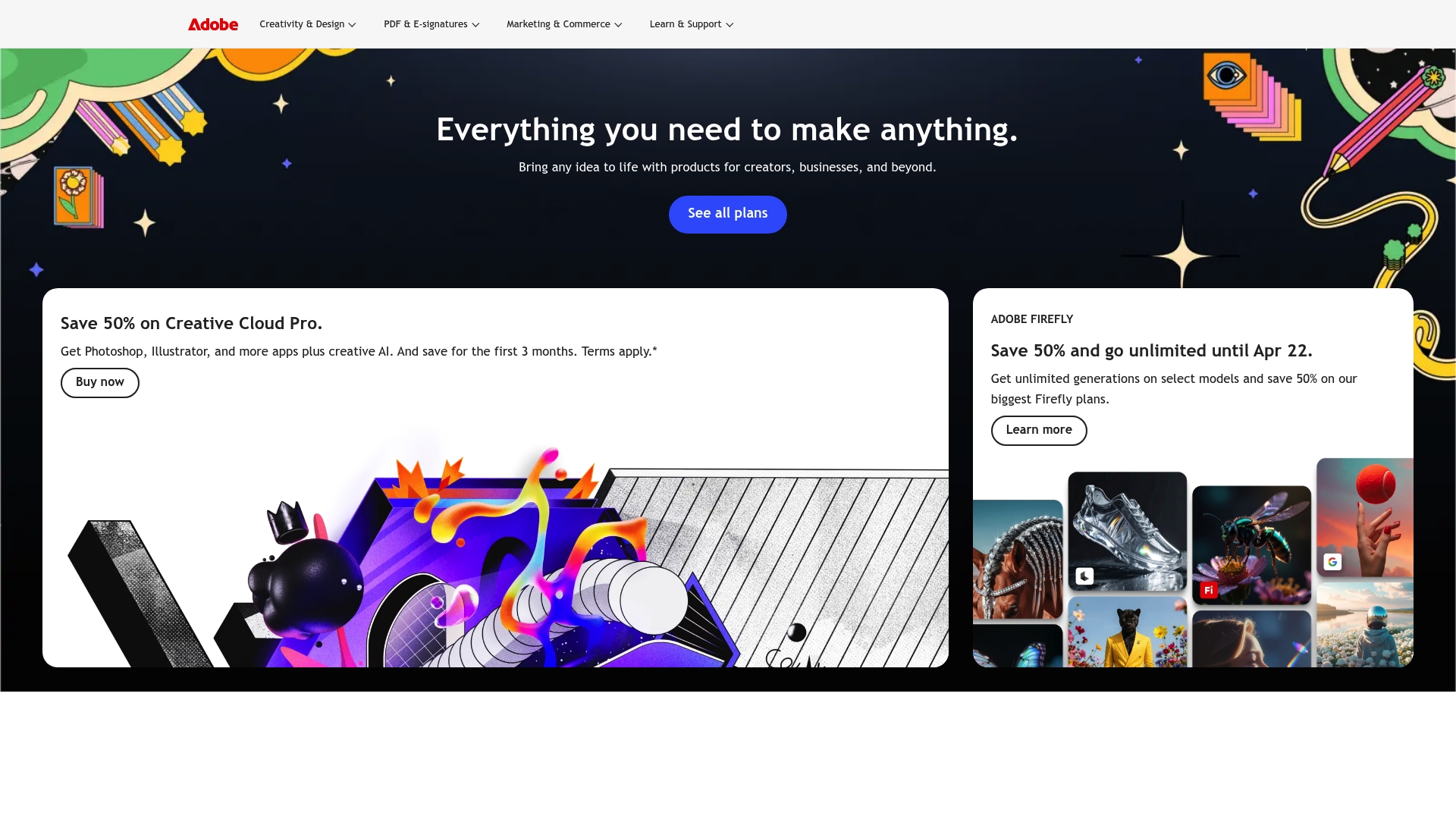
Adobe Creative Cloud provides a comprehensive suite of tools for designers, artists, and marketing teams who produce frequent visual content. It combines industry standard apps with creative AI features and flexible subscription tiers that scale from students to enterprise teams.
Core Features
Adobe bundles access to Photoshop, Illustrator, Premiere Pro, and Firefly in one subscription while offering creative AI tools and cross platform compatibility for desktop and mobile workflows. Plans include promotional discounts, free trial periods, and unlimited generation on select Firefly models.
Pros
-
Extensive suite of creative tools. Adobe covers graphic design, video editing, digital art, and document workflows so teams need fewer point solutions.
-
Flexible subscription options. Multiple plans for individuals, businesses, and students let organizations choose capacity and feature sets that match their budget and scale.
-
Innovative AI-powered features. Firefly and other AI enhancements accelerate asset creation and experimental workflows for rapid iteration.
-
Discounts and promotional offers. New customer discounts and trial windows reduce upfront risk for teams evaluating the platform.
-
Cross-platform compatibility. Apps and cloud assets sync across Windows, Mac, and mobile which eases collaboration between designers and marketing managers.
Cons
-
Can be costly for individual users over time. Subscription fees accumulate and may exceed the cost of one-off licenses for occasional creators.
-
Learning curve for new users. Mastering advanced features across multiple apps requires training or time that teams must plan for.
-
Subscription-based model may not suit all budgets. Organizations that prefer capital expenditure over ongoing operating costs may find plans restrictive.
Who It’s For
Teams that produce high volumes of marketing creative and need best-in-class design and editing tools will get the most value. This includes creative departments inside medium and large enterprises and agencies that require predictable collaboration and asset management across projects.
Unique Value Proposition
Adobe Creative Cloud centralizes a full production stack under one subscription so marketing teams can design, edit, and publish without stitching together separate tools. The combination of industry standard apps and AI generation gives creative teams faster turnaround and consistent asset quality.
Real World Use Case
A marketing team uses Photoshop and Illustrator to create campaign visuals while Premiere Pro assembles video creatives. Firefly supplies AI-assisted variations for A B testing and rapid concepting, all managed under a single subscription that scales as campaign volume grows.
Pricing
Subscription plans vary by user type and feature set with promotional discounts and trial periods available. For specific plan details and enterprise options visit the official pricing page at the link below.
Website: https://adobe.com
Salesforce Agentforce 360
At a Glance
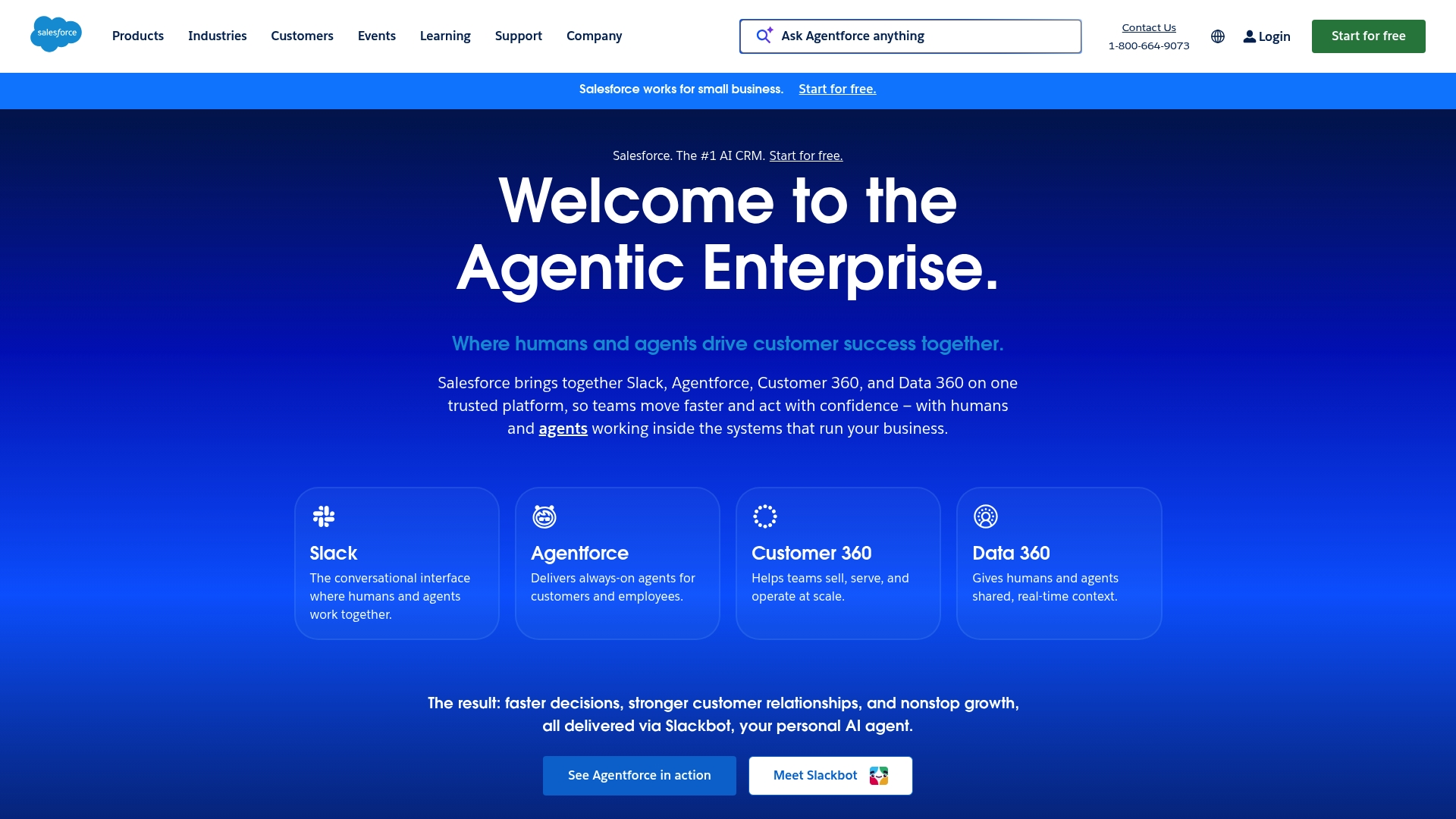
Salesforce Agentforce 360 brings human agents, AI agents, data, and apps onto a single platform to boost productivity and improve customer outcomes. It targets enterprises that need CRM, automation, and industry modules in a single, extensible solution.
Core Features
Agentforce 360 offers a unified platform that combines CRM, analytics, and automation with built-in AI for personalization and predictive insights. It includes industry-specific solutions for Financial Services, Retail, Healthcare, and more. Collaboration features include deep Slack integration and Agentforce in Slack.
Pros
-
Holistic CRM and AI integration: The product merges customer data, automation, and AI to give teams a single source of truth for engagement and analytics.
-
Industry tailored modules: Ready-made vertical solutions shorten time to value by addressing common processes and compliance needs for specific sectors.
-
Powerful automation and prediction: Built-in AI handles routine tasks, surfaces predictive signals, and reduces manual work while improving accuracy.
-
Extensive partner ecosystem: The platform benefits from a broad ecosystem of partners and resources for customization and technical support.
-
Designed for scale: Agentforce 360 supports deployments from mid-sized companies to global enterprises without sacrificing governance or controls.
Cons
-
Steep complexity for teams: The breadth of features creates a learning curve that typically requires dedicated training programs for effective use.
-
Opaque pricing model: Pricing is provided on inquiry and may vary by module and deployment, which makes budgeting difficult without direct vendor engagement.
-
Resource heavy implementation: Smaller organizations can find initial setup and customization resource intensive and may need external consultants.
Who It’s For
This platform fits marketing leaders and operations teams at mid-sized and large enterprises that need a single, AI-driven CRM platform with vertical depth. It suits organizations that value customization, data centralization, and long term scalability over quick out-of-the-box simplicity.
Unique Value Proposition
Agentforce 360 stands out by combining enterprise CRM, industry-specific solutions, and AI into one extensible platform. That pairing reduces the number of point tools you manage while delivering consistent data models and cross-functional automation.
Real World Use Case
A retail enterprise can use Agentforce 360 to personalize customer journeys, automate order management, and analyze purchase behavior to optimize marketing spend. The platform also improves service responsiveness by routing complex cases to human agents with AI-guided context.
Pricing
Pricing is available upon inquiry and often depends on selected modules and industry packages. Plan on engaging Salesforce sales for detailed quotes and scope because enterprise modules and custom work typically affect total cost.
Website: https://salesforce.com
Salesforce
At a Glance
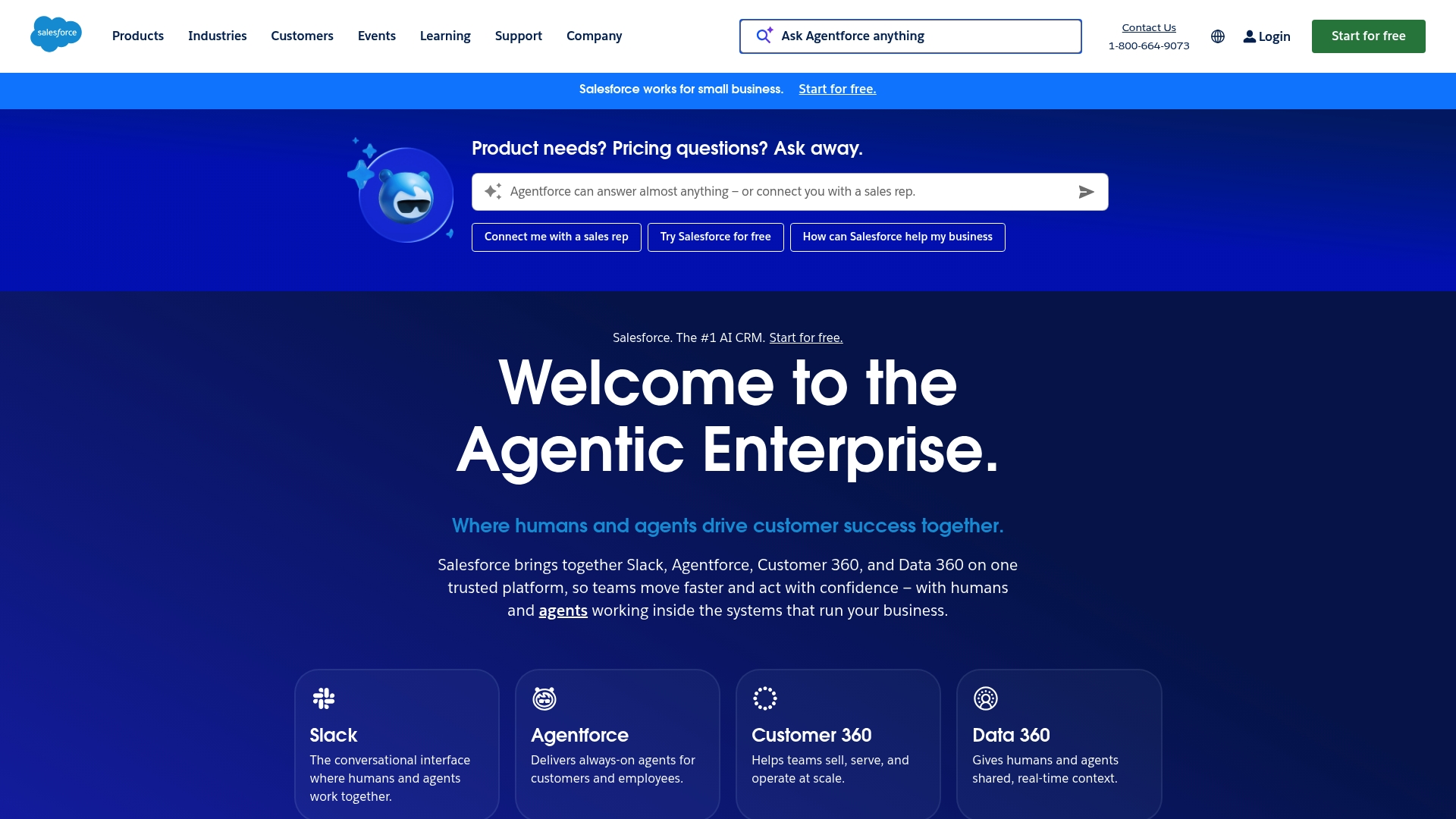
Salesforce positions itself as an AI-powered CRM that unifies customer data, AI, and business applications to drive enterprise growth and operational efficiency. It targets medium and large organizations that need scalability, security, and cross-functional alignment.
Core Features
At its core, Salesforce delivers a deeply unified platform that connects apps, data, agents, and metadata for end to end workflows across teams.
- AI-powered CRM solutions: Leverages predictive insights and automation to surface leads, personalize customer journeys, and reduce manual work.
- Integration of customer data and business apps: Centralizes customer records and signals to give sales and marketing a single source of truth.
- Industry-specific out-of-the-box solutions: Provides templates and processes tailored for Finance, Healthcare, Retail, and other verticals for faster deployment.
- Customer, employee, and partner tools with trust and governance built in: Embeds compliance, role based access, and auditability across the platform.
Pros
- Comprehensive AI-powered platform: The breadth of AI features drives automation and delivers actionable insights across sales, service, and marketing.
- Industry-specific customizable solutions: Prebuilt templates cut deployment time for vertical teams while still allowing configuration to local requirements.
- Unified platform reduces system fragmentation: Consolidating apps and data lowers integration overhead and centralizes governance for enterprise teams.
- Strong enterprise track record and brand reputation: Proven at scale with global deployments and enterprise level security practices.
- Free trial and scalable pricing options: Trial access lets teams evaluate core capabilities before committing to enterprise contracts.
Cons
- The platform complexity creates a steep learning curve for new users and requires structured onboarding for teams.
- Pricing can be expensive for smaller business units and startups when advanced modules or seats are required.
- Implementing deep customization and integrations often requires technical expertise or partner resources beyond marketing teams.
Who It’s For
Salesforce is best for medium to large businesses that need an AI-enabled, scalable CRM with strong integration and governance capabilities. If your organization runs multiple product lines or regulated operations, Salesforce provides the control and vertical depth you need.
Large teams win.
Unique Value Proposition
Salesforce’s unique value lies in combining broad AI capabilities with industry specific solutions on a single platform. That combination reduces duplicated systems while offering built-in trust controls and deployment patterns for regulated and high traffic environments.
Real World Use Case
PepsiCo uses Salesforce to optimize customer engagement and operational efficiency across global sales and marketing teams. The platform helps route service cases, personalize B2B offers with AI insights, and centralize reporting for regional leaders.
Pricing
The Starter Suite begins at $25 USD/user/month. Full pricing varies by product, feature set, and industry solution and is available on Salesforce’s pricing page.
Website: https://salesforce.com
ActiveCampaign
At a Glance
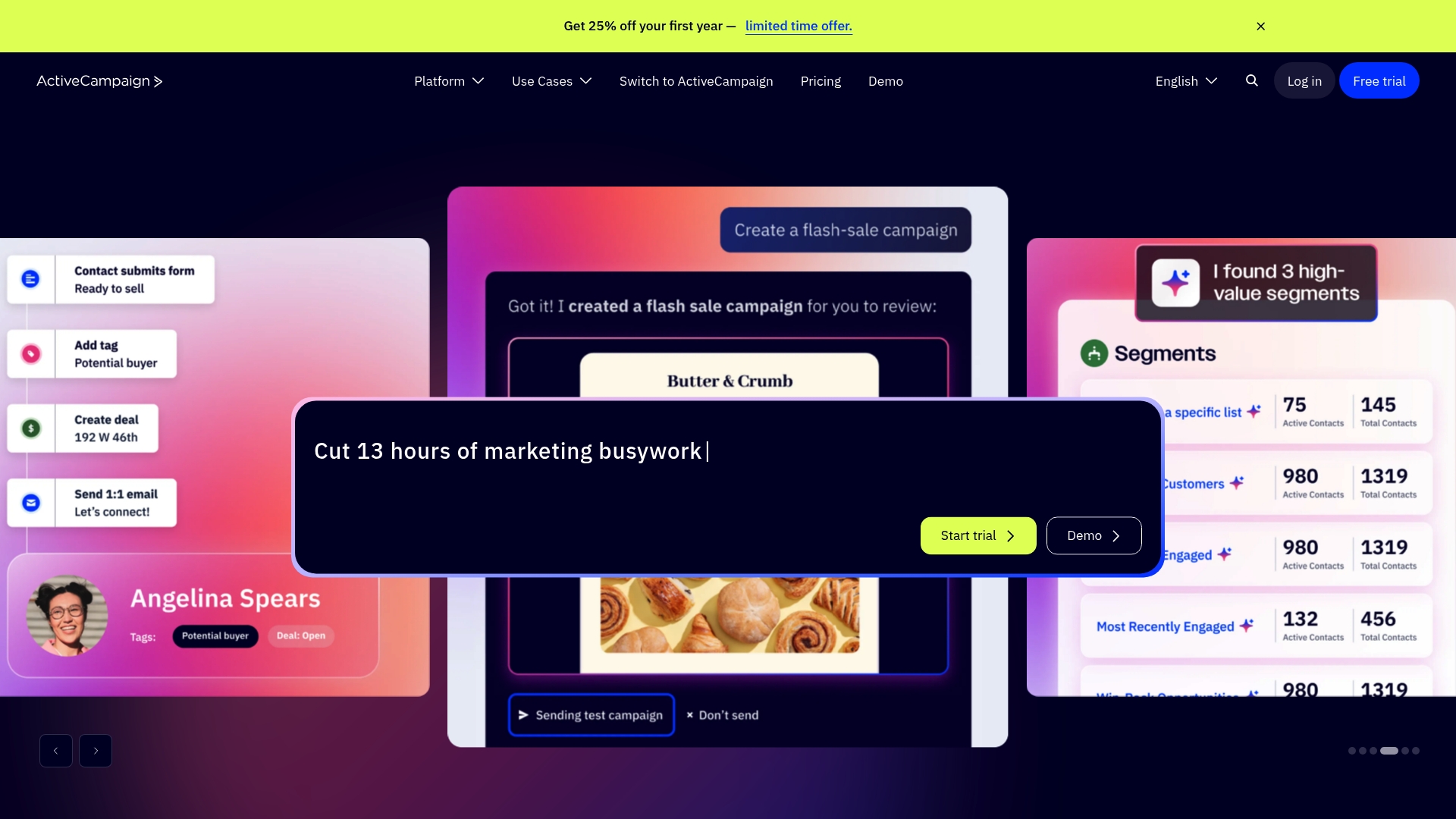
ActiveCampaign is a full-featured marketing automation platform built around AI-powered marketing and a connected CRM. It balances advanced automation and multi-channel outreach, making it a strong choice for teams that need personalized campaigns and measurable results.
Core Features
ActiveCampaign combines automation workflows, CRM and sales automation, content tools, analytics, and multi-channel messaging in one platform. It supports email, SMS, WhatsApp, landing pages, and web integration while offering AI tools for content personalization and predictive automation.
Pros
- Comprehensive automation features that let you build complex, conditional customer journeys without code and reduce manual campaign work.
- Multi-channel marketing capabilities that enable consistent messaging across email, SMS, WhatsApp, and landing pages for coordinated campaigns.
- Strong integrations with other apps and platforms so you can connect customer data across your stack and keep systems synchronized.
- AI tools for personalized marketing and automation that speed content creation and help tailor messages based on behavior and predictive signals.
- Flexible plans suitable for different business sizes providing an upgrade path as campaigns and contact lists grow.
Cons
- Pricing may be high for small startups or small businesses because advanced automation and multi-channel features often sit behind higher-tier plans.
- Complexity of features might require a learning curve since building conditional automations and optimizing AI models needs experienced operators.
- Some features are only available in higher-tier plans which can force larger investments to access advanced reporting or enterprise capabilities.
Who It’s For
ActiveCampaign suits marketing leaders at medium and large enterprises that need a unified solution for marketing automation and CRM. It fits teams that run high-volume campaigns across channels and want to apply AI to personalization and journey orchestration.
Unique Value Proposition
ActiveCampaign delivers an integrated stack where automation logic, CRM data, and multi-channel execution live together. That tight coupling lets marketing and sales teams act on the same triggers and customer segments without stitching multiple point solutions together.
Real World Use Case
A retail business uses ActiveCampaign to automate abandoned cart emails and SMS, segment customers by purchase behavior, and run targeted promotions on WhatsApp and email. The team measures conversion lift with built-in analytics and iterates on journeys using AI-driven personalization.
Pricing
ActiveCampaign offers multiple plans with a basic monthly fee and tiered feature access. A free trial is available and purchases include a 30-day money-back guarantee. Enterprise customization and pricing are available for large accounts that need advanced support and service levels.
Website: https://activecampaign.com
Comprehensive Product Comparison of Business Solutions
This table compares various business solutions based on their capabilities, advantages, and target audiences, as outlined above, providing an organized overview to aid decision-making.
| Product Name | Core Features | Pros | Cons | Pricing |
|---|---|---|---|---|
| 40Q Agency | Customizable WordPress platforms, autonomy, enterprise integrations, governance workflows | Marketing power, secure editorial workflows, scalability | Pricing not detailed, tailored quotes required | Contact Agency |
| HubSpot | AI-powered CRM, unified hubs, 2000+ integrations | Comprehensive tools, AI for personalization, free entry, trusted brand | Complexity and setup time, premium tiers can be costly | Free CRM + Subscription plans |
| Adobe Creative Cloud | Photoshop, Illustrator, Firefly AI, flexible subscriptions | Extensive toolset, cross-platform, AI capabilities, promotions | Learning curve, may be expensive over time | Variable tiers, promotional discounts |
| Salesforce Agentforce 360 | CRM integration with AI, industry-tailored modules, Slack collaboration | Customizable vertical depth, predictive analytics, scalable structure | Implementation overhead, pricing inquiries needed | Custom quotes |
| ActiveCampaign | Multi-channel marketing automation, AI-driven personalization | Strong automation capabilities, site-wide CRM integration | Subscription costs for advanced features, learning resources required | Free trial, tiered subscriptions |
Unlock Marketing Autonomy with Enterprise-Grade Platforms
The “Top 6 Best Marketing Automation Platforms 2026” article highlights the increasing need for marketing teams to act quickly without relying on developers. Key challenges include balancing rapid campaign launches with robust governance and security. If your organization struggles with developer dependency and complex content workflows, 40Q offers a powerful solution designed precisely for these pain points.
Our proprietary FAS Block System™ empowers marketing teams to launch landing pages, campaigns, and localized content swiftly while IT maintains full control over performance and compliance. Combining marketing autonomy, AI-assisted content workflows, and enterprise security, 40Q bridges the gap between speed and reliability for content-heavy organizations.
Explore how you can transform your marketing operations with 40Q’s enterprise WordPress platforms.
Take control of your marketing automation and reduce bottlenecks today. Visit 40Q Agency to see how your team can accelerate time to market without sacrificing security or scalability.
Frequently Asked Questions
What are key features to look for in the best marketing automation platforms in 2026?
A well-rounded marketing automation platform should include features such as email marketing, lead scoring, social media integration, and analytics. Evaluate your team’s needs and prioritize platforms that offer customization and seamless integration with your existing tools.
How can I determine if a marketing automation platform is right for my business?
To determine if a platform fits your business, assess your specific marketing goals, team size, and budget. Conduct a trial or demo to explore its usability and functionalities, ensuring it aligns with your operational requirements.
What is the typical pricing structure of marketing automation platforms in 2026?
Pricing for marketing automation platforms usually varies based on features and user seats. Look for affordable plans that allow for scalability, such as tiered pricing models that can accommodate growing marketing needs as your business expands.
How long does it take to set up a marketing automation platform?
Setting up a marketing automation platform typically takes anywhere from a few days to a couple of weeks, depending on the complexity of your needs. Start by developing a clear implementation strategy and timeline, and ensure your team is trained to use the new system effectively.
What benefits can I expect from using a marketing automation platform?
You can expect benefits such as increased efficiency in managing marketing campaigns, improved lead nurturing, and better data insights. By automating repetitive tasks, you can save time and resources, potentially increasing conversion rates by ~20% within the first few months of implementation.
How does AI influence marketing automation platforms in 2026?
AI enhances marketing automation platforms by enabling smarter segmentation, personalized content delivery, and predictive analytics. Take advantage of these AI capabilities to optimize your campaigns and enhance customer engagement effectively.
Recommended
Jan 18, 2026
WordPress
High Traffic WordPress Guide for Enterprise Success

Aug 21, 2024
WordPress
FAS™ and Gutenberg

Oct 21, 2025
WordPress