
Joomla to WordPress Migration

Leave Joomla
with every URL mapped

Your Joomla site works, but every new layout waits on whoever manages the template, and every major version means another upgrade project. We move it to WordPress with your content, URLs, extensions and languages accounted for.

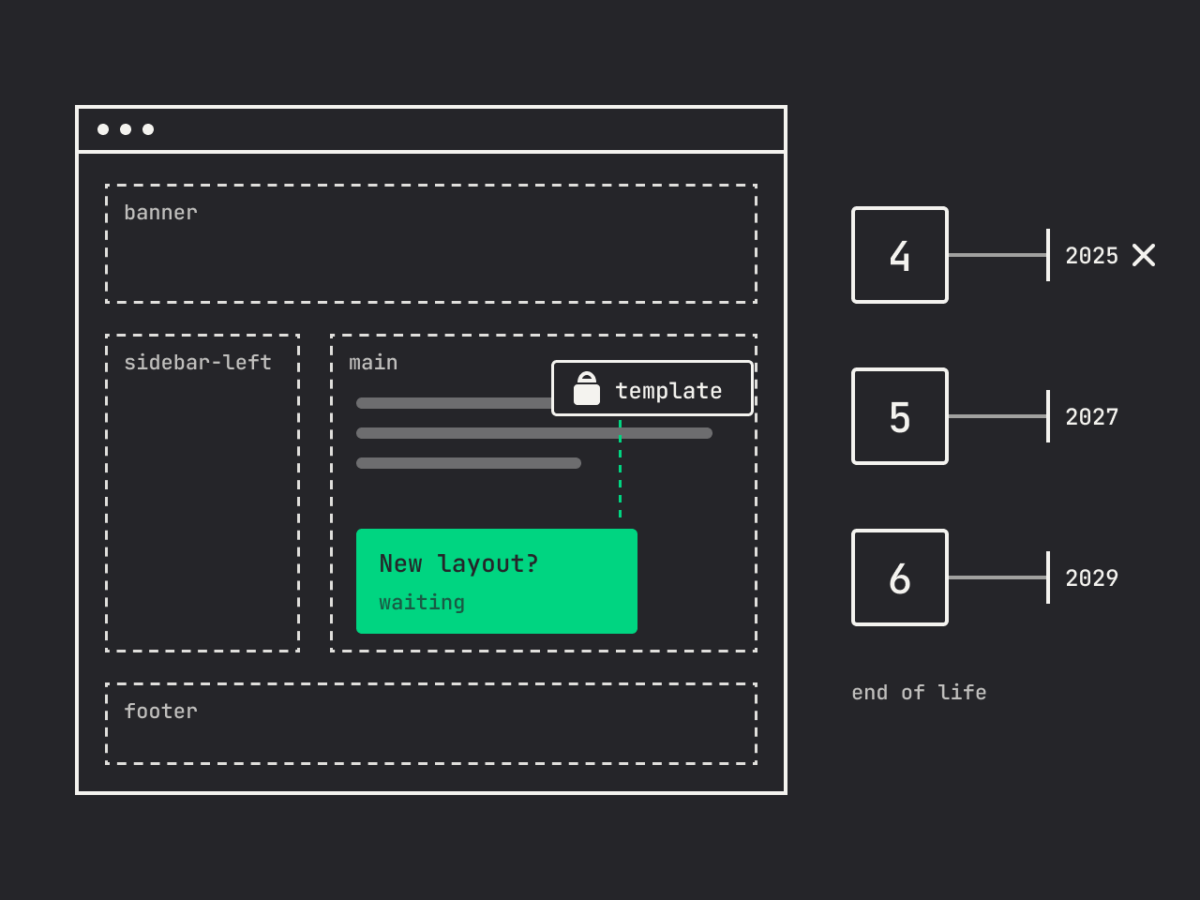
A page split into template module positions, with a new layout request waiting on the template, and Joomla versions 4, 5 and 6 with end-of-life years 2025, 2027 and 2029

The real problem

Your Joomla site is not broken. The way it changes is.

The pages load and the content is there. What slows you down is the part where marketing wants a new page layout and the answer depends on the template, its module positions and the one person who knows them.

Then a new major version arrives. Joomla moved through versions 4, 5 and 6 between 2021 and 2025, and each one has an end-of-life date that your template and extensions have to follow. Every upgrade gets scoped, tested and paid for, and the site stands still while it happens.

Still weighing the platforms? Read WordPress vs Joomla for enterprise teams, or compare WordPress with other platforms.

What the migration covers

Everything that has to survive the move

A migration is not a content export. These are the six layers that decide whether the new site behaves like the old one on launch day.

  • Content model mapping

    Joomla articles, categories and custom fields become posts, pages, custom post types and taxonomies, mapped during discovery so each piece of content lands where your editors expect it.

  • Templates and modules

    Module positions and template overrides become blocks and patterns your editors place themselves. Layout stops living in the template and starts living in the editor, inside approved designs.

  • Media library

    Files from the images folder import first, with duplicates removed. A second pass rewrites every reference inside articles, so no image breaks after launch. PDFs and other indexed files get their own redirects.

  • URLs and redirects

    Joomla serves pages through menu aliases, search-friendly URLs and older index.php addresses. The redirect map is built from a full crawl that captures all of them, and one rule holds: no redirect chains.

  • Extensions and integrations

    Each extension is reviewed in the diagnosis and sorted: replaced by a WordPress plugin or a core feature, rebuilt as custom code, or retired. Forms, CRM, marketing automation and analytics are rebuilt and tested before the switch.

  • Languages, users and roles

    Multilingual content keeps its translations linked, so each page still points to its other languages. User groups map onto WordPress roles, with authors kept on their content.

AI in migrations

Agents map your content before anything moves

Joomla keeps content in articles, categories, custom fields and modules. Agents read that structure, propose where each piece lands in WordPress, and your team approves the map.

  • Field-level extraction

    Articles, fields, menus and media are extracted into a shared sheet you review with us.

    In use
  • Two to three months without a redesign

    Agents carry most of the content mapping, which is what used to make CMS moves long.

    In use
  • AI-assisted testing

    Compares each migrated page with its Joomla original and flags what changed.

    In development
Read: what it costs to stay on your current platform

AI suggestion

Migration mapping · example

Legacy component
Custom module in the banner position with image, title and link
Proposed block
Cover block with one primary button
Note
Content mapped one to one. Alt text drafted for review.

Nothing moves unreviewed

What changes

From “ask whoever runs the template” to “it’s already live”

After the migration, the people who write the content are the people who publish it.

Editors assemble pages from approved blocks and see the result as they work. Updates are planned into the monthly work instead of waiting for the next major version. Your developers go back to work that needs developers.

The same move for a travel company: Esteros Viajes left Joomla for WordPress, and today runs its site in English and Spanish, with an online rates system for its customers. Read the case

Team reviews CMS migration plan in office

The plan

How the migration runs

Three steps, with a decision point at the end of each one. Your Joomla site stays live until the new one is verified.

  1. Step 1

    Diagnose

    A full crawl of your Joomla site, a content inventory, an extension-by-extension review and a baseline of every URL, canonical tag and metadata value. Then a pilot: a real slice of content migrated end to end, so the mapping is proven before the full run.

  2. Step 2

    Build or migrate

    Frontend, backend and content migration run in parallel while Joomla stays live and editable. QA covers browsers, integrations, languages and the editor workflows, tested with the people who will use the CMS.

  3. Step 3

    Operate

    Cutover with the previous site kept available, so rollback is a decision rather than a project. We watch rankings and coverage until they settle, and keep improving the platform with your team.

Before you commit

See what your migration actually involves

In 30 minutes we look at your content, your extensions and your URL structure, and tell you what moving them involves. No obligation to go further.

FAQ

What teams ask before leaving Joomla

The questions that come up on every Joomla migration call, answered plainly.

Ready when you are

Stop planning around the next Joomla upgrade

Bring us your Joomla site and we will map the path off it: content, redirects, extensions, languages, and the workflows your team will use on day one.